Install Findmino as an app for the best experience!
Career Guidance Counsellor
(Careers Adviser, Guidance Counsellor, Career Coach, Educational Guidance Adviser)
Education & Training
Salary
€38,000 - €72,000/yr
Level
Professional
Outlook
Stable
Sector
Education & Training
What does a Career Guidance Counsellor do?
As a Career Guidance Counsellor you support students and adults in making informed decisions about their education, training and career paths. You hold one-to-one counselling sessions, administer psychometric and interest assessments, and help clients explore options ranging from Leaving Certificate subject choices to third-level courses and apprenticeships. In a school setting you liaise closely with students, parents, class teachers and external bodies such as CAO, SOLAS and higher education institutions. You also provide personal and social support, signposting clients to additional services where needed, and keep up to date with labour market trends and funding pathways so your advice remains relevant and accurate.
A Day in the Life
Listen: a day as a Career Guidance Counsellor
You arrive at your secondary school shortly before eight-thirty, grab a coffee from the staffroom and open your email. There are two messages from parents asking about CAO application deadlines and one from a fifth-year student who has changed her mind about her subject choices. You note them all and check your appointment diary on the school's management information system before the bell rings. Your first one-to-one is with a sixth-year boy who is anxious about his Leaving Certificate points and whether he can get into a Level 8 nursing degree. You walk him through the NMBI registration requirements, explain that a lower points year might mean considering a Level 7 route first with a transfer option, and reassure him that both paths are legitimate. You record brief, factual notes on the session in line with the school's data protection policy.
Videos about Career Guidance Counsellor
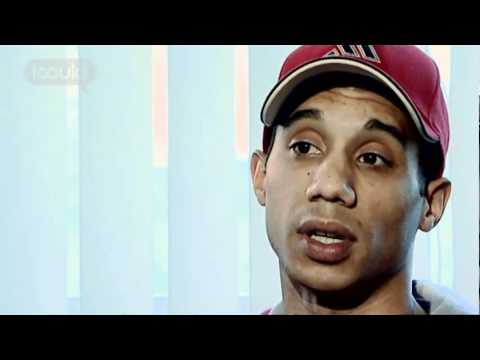
Career Advice on becoming a Counselling Student by Matthew B (Full Version)
icould career stories
Some videos were filmed in the UK. The work itself is the same, but the exams, qualifications and pay they mention are British — we include them so you get a feel for the job.
Required Education
Most Career Guidance Counsellors in Irish secondary schools hold an Honours Bachelor degree (NFQ Level 8) in a relevant discipline such as psychology, education or social science, followed by a postgraduate qualification in guidance counselling at NFQ Level 9, such as the Master of Education in Guidance Counselling offered at institutions including UCD, University of Galway and Mary Immaculate College. Leaving Certificate subjects that are particularly useful include Irish, English, Mathematics, Biology, and any social science or SPHE-related subjects that develop communication and analytical thinking. To work as a guidance counsellor in a publicly funded secondary school in Ireland you must be a registered teacher with the Teaching Council and hold an approved guidance counselling qualification recognised by the Department of Education. Those working outside second-level education — in further education colleges, community settings or private practice — may register with the Institute of Guidance Counsellors (IGC) or the Irish Association for Counselling and Psychotherapy (IACP), each of which has its own accreditation requirements. Continuing professional development is expected throughout your career, covering topics such as mental health awareness, labour market intelligence and digital assessment tools.
Required Skills
Career Perspective
Most people enter the profession as a second-level teacher before completing a postgraduate guidance qualification and taking on a guidance counselling role within a school, often on a part-time allocation initially. With experience, you may take on a full-time guidance role in a larger school or DEIS school where wellbeing and social inclusion work is particularly prominent. Senior practitioners can progress to advisory or leadership positions within the National Centre for Guidance in Education (NCGE), ETBs or further education colleges, or establish a private practice offering career coaching and outplacement services to adults. Experienced counsellors also move into lecturing on guidance programmes in higher education institutions or into policy and research roles.
AI Impact on the job
AI-powered career exploration platforms and chatbots are increasingly used as first-stop tools for students researching courses and occupations, which means routine information-giving is becoming more automated. However, the relational, empathetic core of guidance counselling — helping a young person process anxiety about the future or a client navigate redundancy — cannot be replicated by algorithms, keeping human practitioners central to the profession. Career Guidance Counsellors will be expected to curate and critically evaluate AI-generated resources, integrate digital assessment tools into their practice, and help clients develop digital literacy as part of career readiness. Overall, AI is more likely to augment the role by freeing up time for complex casework than to reduce demand for qualified counsellors.
Career Ladder
→ Career Guidance Counsellor (Current role)
Related Studies
Employers in Ireland
Organisations in Ireland that employ people in this occupation.
Nationwide
Guidance counsellors appointed to all second-level schools nationally.
Nationwide
Guidance in ETB colleges, PLC programmes and adult education centres.
Dublin
Supporting career guidance for students with disabilities in higher education.
Nationwide
Career guidance and vocational assessment for adults with disabilities.
Nationwide
Career guidance and employment advice for jobseekers across Ireland.
Dublin
Guidance integrated into national further education and training programmes.
Belfield, Dublin 4
Career counsellors advise undergraduate and postgraduate students on careers.
Dublin 2
Delivering one-to-one career guidance and psychometric assessments to students.
Dublin / Blanchardstown / Tallaght
Career counsellors supporting students across multiple TU Dublin campuses.
Dublin
Private career coaching and outplacement guidance services for adults.
Dublin 17
Community-based career guidance and employment support for local adults.
We don't know whether these employers currently have vacancies — always check their own website. And if there's somewhere you'd really love to work, it can be worth applying anyway, even without an open vacancy.
Our tools can help you with that:
This website uses cookies
We use functional cookies and — with your consent — cookies for preferences, statistics and marketing.