Install Findmino as an app for the best experience!
Duration
4 years
Level
Bachelor
Outlook
Stable
What will you learn?
A journalism degree teaches you to research, write, and produce news content across print, broadcast, and digital platforms. You study media law, ethics, data journalism, and multimedia storytelling, developing practical skills in video production, audio editing, and social media reporting. Most programmes include substantial industry placements with outlets such as RTÉ, The Irish Times, regional newspapers, and digital newsrooms, giving you real-world experience before you graduate. A typical week combines lectures on media theory and law with hands-on studio sessions, newsroom simulations, and pitching stories for student publications or campus radio. Some programmes offer Erasmus exchange opportunities with European journalism schools.
Videos about Journalism
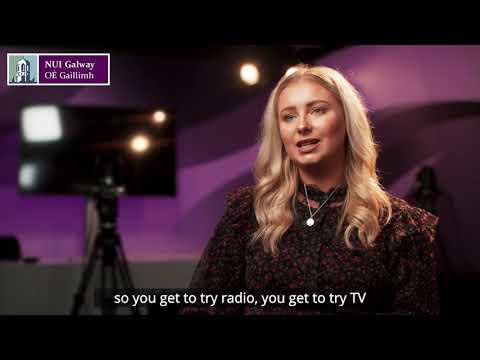
Journalism at NUI Galway
Required Education
Entry is typically through the CAO with a Leaving Certificate, requiring a minimum of six subjects including English, which is usually required at Higher level given the writing demands of the course. CAO points are generally moderate to high, reflecting strong competition for places. Useful Leaving Cert subjects include Irish, History, Politics and Society, and a modern language. QQI Level 5 or 6 qualifications in media, communications, or journalism from a PLC course can provide an alternative progression route to Level 7 or Level 8 programmes. Mature students aged 23 or over may apply directly through the CAO mature entry route, and HEAR and DARE schemes support applicants from socioeconomic or disability backgrounds.
Core Subjects
Career Prospects
Demand for journalists in Ireland remains steady, though the industry has shifted significantly towards digital platforms, meaning graduates with multimedia and data skills are better placed than those with print-only experience. Traditional newsroom positions are competitive and often entry-level salaries are modest, typically in the region of €26,000–€32,000, but experienced journalists and editors can earn €45,000–€65,000 or more. Freelancing is common in the Irish market, particularly in features, documentary, and specialist reporting. Graduates also transition successfully into public relations, content marketing, and communications roles, which generally offer stronger starting salaries.
Impact of AI on this program
AI tools are already reshaping journalism through automated report generation, AI-assisted transcription, and algorithmic news curation, and journalism programmes are beginning to incorporate these tools into training. Data journalism and AI literacy are increasingly expected skills, as newsrooms use machine learning to analyse large datasets and identify trends. However, investigative reporting, source building, ethical judgement, and storytelling remain fundamentally human skills that AI cannot reliably replicate. Journalists who can work alongside AI tools while maintaining critical editorial standards are likely to be most employable in the evolving Irish media landscape.
CAO courses & points
3 CAO courses lead to this qualification. Points shown are last year's Round 1 score.
Where can you study this?Providers and indicative points are curated with AI support. Always double-check with the institution itself.
Verified yesterday
Providers and indicative points are curated with AI support. Always double-check with the institution itself.
CAO points (indicative): 280-480 (2024)
* Indicative only: CAO points change every year. Always check the current points on cao.ie and with the institution.
How to apply
Most undergraduate journalism degrees in the Republic of Ireland are accessed through the CAO (Central Applications Office) at cao.ie, with applications submitted by 1 February (or 1 March with late fee). Griffith College and Ulster University accept direct applications through their own admissions portals outside the CAO system.
This website uses cookies
We use functional cookies and — with your consent — cookies for preferences, statistics and marketing.