Install Findmino as an app for the best experience!
Marine Science
Environment, Agriculture & Animals
Duration
4 years
Level
Bachelor
Outlook
Growing
What will you learn?
A Marine Science degree immerses you in the study of ocean systems, coastal environments, marine biology, and the physical and chemical processes that govern the sea. You will explore topics ranging from fisheries management and aquaculture to oceanography and marine ecology, with strong emphasis on fieldwork and laboratory analysis. University of Galway and UCC both benefit from exceptional west-coast and south-coast access, meaning you will spend considerable time on research vessels, at marine stations, and in tidal and coastal habitats. A typical week combines lectures and data analysis practicals with field sampling sessions, and many programmes include placements with bodies such as the Marine Institute or Bord Iascaigh Mhara. Some programmes offer Erasmus exchange opportunities at leading European marine research institutions.
Videos about Marine Science

AU655 & AU555 Applied Freshwater & Marine Biology
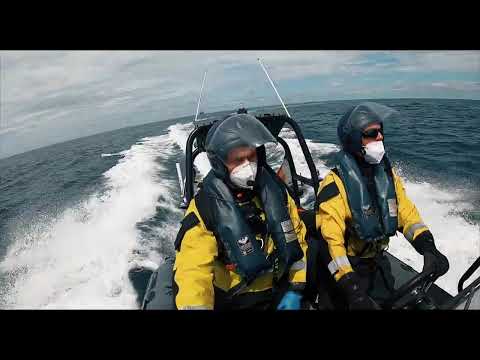
“Patrolling the Horizon” - Ep 2: Fisheries Boarding
Required Education
Entry is through the CAO, and points for Marine Science programmes at University of Galway and UCC are typically moderate to high, reflecting steady competition for places. You will generally need at least six subjects in the Leaving Certificate, including a minimum grade in English and Mathematics, with Higher-level Biology and/or Chemistry being strongly advantageous. Higher-level Maths is not always mandatory but will give you a significant advantage in quantitative modules. QQI Level 5 or 6 FET qualifications in Science or Agriculture can provide a progression route into the programme for those who did not follow the traditional Leaving Cert path. Mature students (aged 23 or over) may apply directly and are assessed on relevant experience and motivation. HEAR and DARE schemes are available to eligible applicants from socioeconomically disadvantaged backgrounds or with disabilities.
Core Subjects
Career Prospects
Demand for marine scientists in Ireland is steady and likely to grow, driven by EU environmental legislation, the expanding Blue Economy, and Ireland's obligations under the Marine Strategy Framework Directive. Graduates with strong quantitative and GIS skills are particularly sought after by both public agencies and private consultancies. Starting salaries in environmental consultancy or public-sector research roles typically range from approximately €28,000 to €38,000 gross per year, with experienced scientists earning considerably more. Further postgraduate study significantly enhances career prospects, particularly for research-focused roles.
Impact of AI on this program
AI and machine learning are increasingly used in marine science for tasks such as processing large oceanographic datasets, species identification from underwater imagery, and predictive modelling of fish stock dynamics. As a student and future graduate, you will be expected to engage with these tools alongside traditional field and lab methods. AI is unlikely to replace the hands-on fieldwork, vessel-based sampling, and ecological expertise that define the profession, but data literacy and familiarity with computational tools will become ever more important. Upskilling in programming languages such as Python or R during your degree will make you a stronger candidate in a competitive graduate market.
CAO courses & points
2 CAO courses lead to this qualification. Points shown are last year's Round 1 score.
Where can you study this?Providers and indicative points are curated with AI support. Always double-check with the institution itself.
Verified 2 days ago
Providers and indicative points are curated with AI support. Always double-check with the institution itself.
CAO points (indicative): 260-490 (2024)
* Indicative only: CAO points change every year. Always check the current points on cao.ie and with the institution.
How to apply
Most undergraduate Marine Science programmes in Ireland are accessed through the CAO system (cao.ie), with applications submitted by 1 February each year. Leaving Certificate results determine offer of a place in August, and some programmes may have additional subject requirements such as Biology, Chemistry, or Mathematics.
Possible Job Matches
Right after this study
Jobs you qualify for immediatelySimilar Studies
Agri-Business and Food Marketing
An Agri-Business and Food Marketing degree blends agricultural science with business, economics and marketing skills relevant to Ireland's agri-food...
4 years
BachelorAgricultural Science
A Bachelor of Agricultural Science introduces you to the science underpinning crop and animal production, land management, and food systems. You will...
4 years
BachelorAnimal Science
Animal Science at degree level covers the biology, nutrition, genetics, and welfare of farmed and companion animals, with a strong emphasis on the...
4 years
BachelorApplied Ecology and Conservation
An Applied Ecology and Conservation degree puts you at the forefront of protecting Ireland's natural habitats and wildlife. You study how ecosystems...
4 years
Discover more on Findmino
Other studies, careers, ideas and blogs you might not know yet.
This website uses cookies
We use functional cookies and — with your consent — cookies for preferences, statistics and marketing.