Install Findmino as an app for the best experience!
Media Studies
Communication & Media
Duration
4 years
Level
Bachelor
Outlook
Stable
What will you learn?
A Media Studies degree blends critical theory with hands-on production skills, giving you a thorough understanding of how media shapes society, culture and politics. You explore journalism, film, broadcasting, digital media, advertising and public relations, developing both analytical and creative abilities. Practical modules let you produce podcasts, video content, online articles and social media campaigns, while dedicated production studios and editing suites support your work. Many programmes include a supervised work placement with broadcasters such as RTÉ or Virgin Media, or with digital publishers and PR agencies. A typical week combines lectures on media theory, small-group seminars debating current media issues, and studio or lab sessions where you develop your production portfolio. Some programmes also offer Erasmus exchange opportunities with European media schools.
Videos about Media Studies
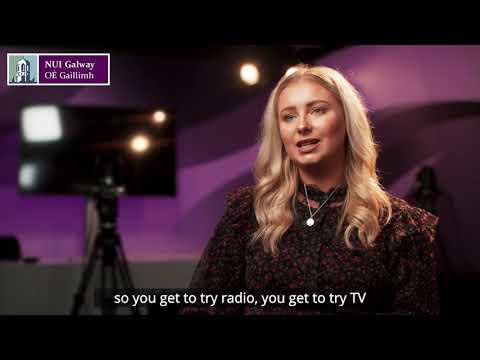
Journalism at NUI Galway
Required Education
Entry is typically through the CAO, requiring a minimum of six Leaving Certificate subjects including English, which is usually required at Higher level given the writing and communication demands of the course. Points requirements at DCU and Maynooth are generally moderate to high, reflecting strong competition for places. Useful Leaving Cert subjects include English, History, Politics & Society, Art, and Business, though no specific science subjects are normally required. QQI FET Level 5 or Level 6 awards in Journalism, Media Production or Communications can provide an alternative progression route into Level 7 or Level 8 programmes. Mature applicants aged 23 or over may apply directly through the CAO mature-student route, and HEAR and DARE access schemes support applicants from socioeconomic disadvantaged backgrounds or with disabilities.
Core Subjects
Career Prospects
The Irish media and communications job market is competitive, but graduates with a strong digital skills portfolio and placement experience are well placed to find employment. Demand for digital content creators, data-literate social media managers and multimedia journalists has grown steadily as traditional media organisations adapt to online platforms. Salaries for entry-level roles typically range from around €28,000 to €35,000 per year, with experienced professionals in PR or corporate communications earning €45,000 to €65,000 or more. Entrepreneurial graduates also pursue freelance careers or found their own digital media outlets and content agencies.
Impact of AI on this program
AI tools are already transforming the media industry, automating routine tasks such as data journalism, sports reporting and content scheduling, which means graduates need strong critical and creative skills that machines cannot easily replicate. Newsrooms and agencies now expect graduates to be comfortable using AI-assisted editing software, audience analytics platforms and automated content tools. However, AI also creates new opportunities in areas such as interactive storytelling, personalised content delivery and synthetic media production. Understanding the ethical implications of AI-generated content, including issues of misinformation and deepfakes, is increasingly central to media education.
Where can you study this?Providers and indicative points are curated with AI support. Always double-check with the institution itself.
Verified 2 days ago
Providers and indicative points are curated with AI support. Always double-check with the institution itself.
CAO points (indicative): 250-450 (2024)
* Indicative only: CAO points change every year. Always check the current points on cao.ie and with the institution.
How to apply
Most undergraduate Media Studies programmes in Ireland are accessed through the CAO (Central Applications Office) at cao.ie, with applications typically opening in November for the following September intake. Griffith College Dublin operates outside the CAO system and accepts direct applications through its own admissions process.
This website uses cookies
We use functional cookies and — with your consent — cookies for preferences, statistics and marketing.