Install Findmino as an app for the best experience!
Duration
4 years
Level
Bachelor
Outlook
Growing
What will you learn?
A Sports Journalism degree combines the core skills of news reporting and media production with a specialist focus on sport, one of Ireland's most followed areas of public life. You study print, broadcast, and digital journalism alongside modules dedicated to GAA, rugby, soccer, and other sports coverage. Practical work is central to the programme: you produce podcasts, video packages, live match reports, and social media content throughout your studies. Placements with sports desks, radio stations, or online outlets give you real industry exposure, and some programmes offer Erasmus exchange opportunities in Europe. A typical week might involve attending a lecture on media law in the morning, editing a video report in the afternoon, and covering a local match in the evening.
Videos about Sports Journalism
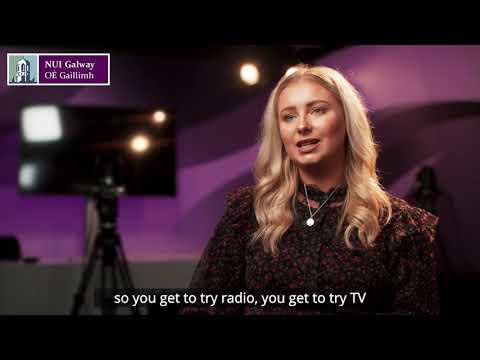
Journalism at NUI Galway
Required Education
Entry is typically through the CAO, requiring a minimum of six subjects in the Leaving Certificate including English, which is almost always essential and ideally taken at Higher level. Points requirements are generally moderate, though popular programmes at institutions like Griffith College and ATU tend to attract competitive applicants. Subjects such as Irish, History, and Media Studies are useful, though not always mandatory. If you do not meet the points directly, a relevant QQI Level 5 or Level 6 PLC course in Journalism, Media, or Communications can provide a progression route into the Level 8 programme. Mature students aged 23 or over may apply through the mature student pathway, and HEAR and DARE schemes are available for eligible applicants from socioeconomic or disability backgrounds.
Core Subjects
Career Prospects
The sports media sector in Ireland is competitive but continues to grow, driven by digital streaming, podcasting, and the global reach of Irish sporting success. Graduates with strong multimedia skills — combining writing, video, and audio production — are better placed than those with a single specialism. Salaries for entry-level sports journalists typically range from around €25,000 to €32,000 gross per year, with experienced broadcast journalists earning considerably more. Freelance and contract work is common early in your career, so building a portfolio and industry contacts during your studies is very important.
Impact of AI on this program
AI tools are increasingly used in sports journalism for automated match summaries, real-time statistics analysis, and content scheduling across digital platforms. You will need to understand how to use these tools critically and ethically, as news organisations begin integrating AI-assisted reporting into their workflows. However, original storytelling, live commentary, investigative journalism, and building trust with sources remain distinctly human skills that AI cannot replicate. Programmes are beginning to incorporate AI literacy modules so that graduates can work alongside these technologies rather than be displaced by them.
Where can you study this?Providers and indicative points are curated with AI support. Always double-check with the institution itself.
Verified 2 days ago
Providers and indicative points are curated with AI support. Always double-check with the institution itself.
CAO points (indicative): 270-480 (2024)
* Indicative only: CAO points change every year. Always check the current points on cao.ie and with the institution.
How to apply
Most undergraduate Sports Journalism and Journalism programmes in Ireland are applied for through the CAO (cao.ie) by the February 1st deadline, with Leaving Certificate results determining offers in August; Griffith College, as a private provider, accepts direct applications year-round and has its own admissions process independent of the CAO.
Possible Job Matches
Right after this study
Jobs you qualify for immediatelyDiscover more on Findmino
Other studies, careers, ideas and blogs you might not know yet.
This website uses cookies
We use functional cookies and — with your consent — cookies for preferences, statistics and marketing.