Working in Pharma and Medtech in Ireland: The Real Career Ladder
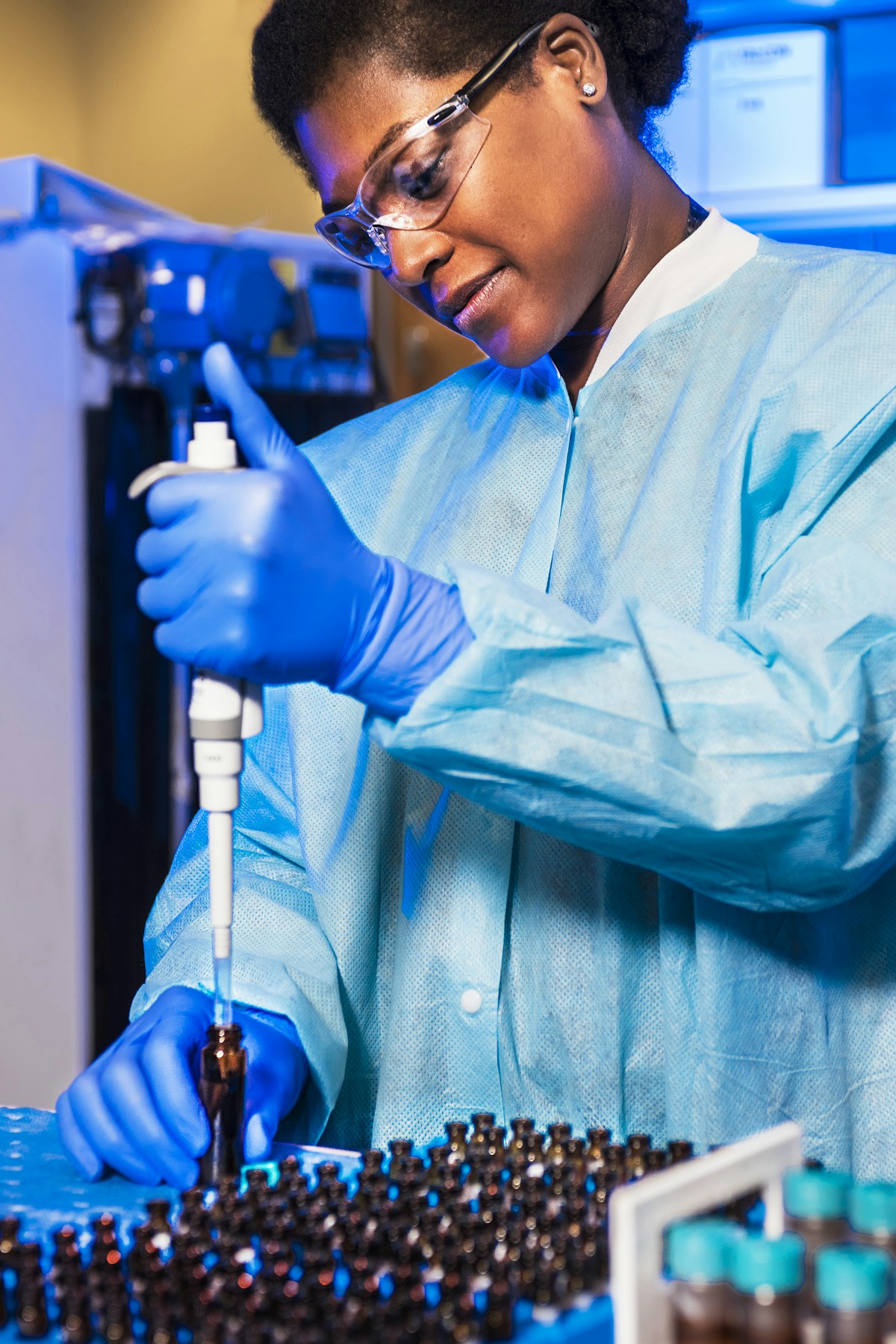
It is two in the morning in a cleanroom outside Limerick. You are gowned from head to foot in a white suit, gloves, and a face mask, watching a filling line push thousands of vials of a biologic drug through a process that cannot be paused for a coffee break. The batch is worth more than most houses. Your job is to monitor the equipment, log every deviation, and escalate anything that looks wrong before it becomes a rejection. It is repetitive, precise, and carries genuine responsibility. That is the job, at the entry level, before anything else.
Ireland ended up hosting so much of this industry for reasons that are worth understanding, because they explain why the work is stable. Low corporate tax, a young English-speaking workforce, membership of the EU single market, and decades of IDA Ireland effort to attract foreign direct investment created clusters that are now self-reinforcing. Companies came, trained people, and those people became the skilled base that attracted the next company. The result is that a disproportionate share of global output in pharmaceuticals and medical devices is produced in Munster, in the mid-east, and along the west coast. Cork has a dense cluster of large pharmaceutical manufacturers. Galway is the centre of medtech in Europe in all but name. The Dublin commuter belt, Sligo, Clare, and Waterford all have significant sites. If you are willing to move within Ireland, the geography works in your favour.
How You Get In
The entry point for most people is an operator or assembly role. Pharma companies hire for these positions with a Leaving Certificate, sometimes specifically looking for passes in science or maths at ordinary or higher level, but the details vary by employer and site. Medtech assembly work, the kind that involves building catheter components or orthopaedic implants under magnification, has a similar profile. Some employers care more about your manual dexterity and your attitude to documentation than your CAO points. A PLC course in science, pharmaceutical manufacturing, or medical device technology, available through FET colleges around the country, is a credible route in and can give you a head start on understanding the terminology before your first shift.
There is also a manufacturing technician apprenticeship registered with SOLAS. It is delivered through a combination of on-the-job training and off-the-job education at an institute of technology, and it leads to a qualification at NFQ Level 6. Some of the largest pharma and medtech employers are approved apprenticeship providers. Check the national apprenticeship website and contact the HR departments of sites near you directly, because availability varies and cohorts are not always advertised widely.
The Ladder That Actually Exists
This is the part that does not get said clearly enough in most career material. The progression in this sector is real and it is structured in a way that most industries are not. A typical path looks like this:
- Operator or assembly technician on the production floor
- Senior operator or lead, taking on training and line oversight
- Technician or technical specialist in maintenance, quality control, or manufacturing sciences
- Validation engineer, quality engineer, or process engineer, often with a degree funded by the employer
The employer-funded degree is not a rumour. Large sites run programmes through institutes of technology and technological universities that allow you to study for a Level 7 or Level 8 qualification while you work, with the company covering fees. The catch is that you are usually tied to the employer for a period after graduating, and you are balancing shift work with study, which is genuinely hard. But people do it, and it is how a significant number of engineers in the Irish pharma and medtech sector got their qualifications.
What the Work Costs You
Shift work is the reality for most production and technical roles, especially on pharmaceutical manufacturing sites that run continuously. Rotating shifts, twelve-hour days and nights, weekend work that is rota'd rather than voluntary: these are normal. The cleanroom environment is physically manageable for most people, but standing for long periods in full gowning gear in a temperature-controlled room is not nothing. Documentation is relentless. Every action is recorded, every deviation is written up, every batch has a trail that has to be complete. If you find that kind of rigour frustrating rather than satisfying, that is worth knowing about yourself before you apply.
The pay for operator roles is above the national minimum wage at most large sites, and it rises meaningfully as you move into technical and engineering grades, but specific figures change and vary by employer, so check current job listings on the major recruitment platforms and ask at interview.
Your Next Step
The single most useful thing you can do now is look up the FET course finder on fetchcourses.ie and search for pharmaceutical or medical device programmes within commuting distance of where you live, then contact the careers or HR departments of the two or three largest manufacturing sites in your region and ask directly whether they are taking on operator trainees or apprenticeship candidates this intake.
Where to look next
The bodies that set the rules and run the routes into this work.
- NIBRT — Biopharma training on industry-standard equipment
- BioPharmaChem Ireland — The industry body for Irish pharma and chemical plants
- IDA Ireland — Which companies are investing, and where
On Findmino: Pharmaceutical Process Technician · Medical Device Assembly Operative · Formulation Scientist · Pharmaceutical Process Engineer