Install Findmino as an app for the best experience!
Medical Device Assembly Operative
(Medical Device Production Operative, Medical Device Assembler, Manufacturing Operative – Medical Devices, Device Assembly Technician)
Engineering & Manufacturing
Salary
€28,000 - €42,000/yr
Level
Operational
Outlook
Growing
Sector
Engineering & Manufacturing
What does a Medical Device Assembly Operative do?
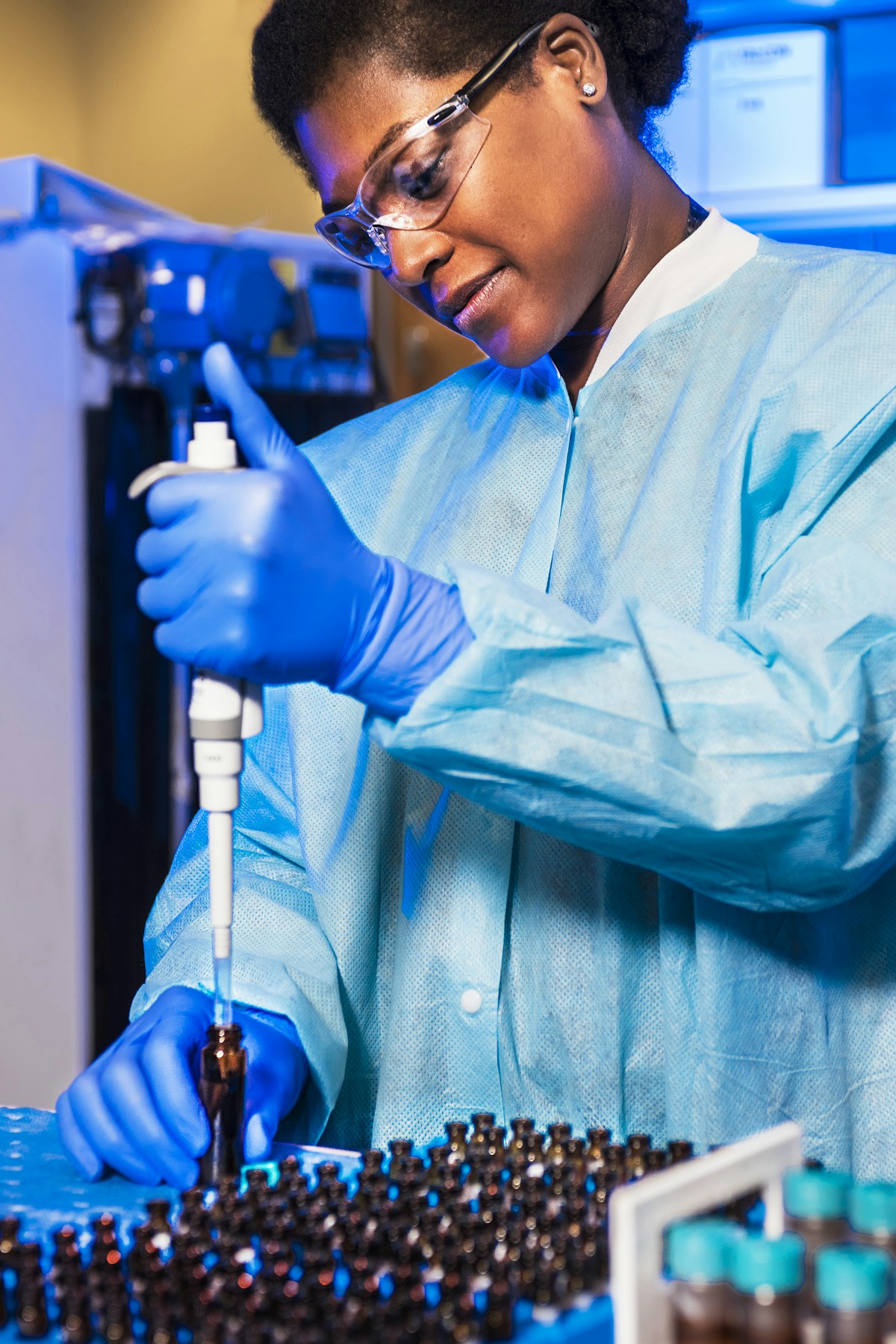
As a Medical Device Assembly Operative you work on the production floor assembling components for medical devices such as catheters, stents, orthopaedic implants, or diagnostic equipment to exacting quality standards. Your daily work involves precise, manual assembly tasks carried out in a cleanroom or controlled manufacturing environment, following strict standard operating procedures (SOPs) and regulatory guidelines. You inspect components and finished assemblies for defects, record production data accurately, and report any quality issues to your team leader or quality technician. You work closely with quality assurance staff, process engineers, and fellow operatives on a shift-based schedule typical of large med-tech facilities in the Galway and Mid-West region.
A Day in the Life
Listen: a day as a Medical Device Assembly Operative
Your alarm goes off at 5:30 a.m. for the early shift. You arrive at the plant just outside Galway city by 6:15 a.m., sign in, and head straight to the gowning room. You pull on a cleanroom suit, hood, gloves, and overshoes before passing through the air shower into the production floor. The cleanroom controls dust and static to protect the devices being assembled, so no jewellery, no personal items, and no rushing through that door. At 6:30 a.m. the shift handover begins. Your team leader runs through the production schedule on the board, flags any quality alerts from the night shift, and reminds everyone which standard operating procedure, known as the SOP, applies to today's build. Today your line is assembling balloon catheters. You collect your tray of components, check the batch documentation, and confirm the part numbers match before touching anything.
Required Education
Entry to this role typically requires a Leaving Certificate or equivalent, with subjects such as Biology, Chemistry, Physics, or Manufacturing Technology being an advantage. Many employers in the Irish med-tech sector accept candidates with a QQI Level 5 award in Manufacturing Technology, Medical Device Technology, or a related discipline from a College of Further Education or ETB. PLC courses in areas such as Pharmaceutical and Medical Manufacturing are available across Connacht and Munster and provide a strong foundation. Some companies offer in-house training programmes or graduate from a SOLAS traineeship route, allowing you to earn while you learn. No specific professional registration is required, though working in a regulated medical device environment means ongoing training and compliance with standards such as ISO 13485 is mandatory.
Required Skills
Career Perspective
Most operatives begin on an entry-level production line, gaining experience across different product families and assembly cells over the first one to two years. With a track record of quality performance you can progress to a senior operative or lead operator role, taking responsibility for training new starters and supporting shift supervisors. Further progression may lead to a Team Leader or Process Technician position, particularly if you pursue a part-time QQI Level 6 or Level 7 qualification in Manufacturing or Engineering Technology through institutes such as ATU Galway or TUS. Experienced operatives who move into quality, engineering support, or technical training roles often find a broad range of opportunities across Ireland's large med-tech cluster.
AI Impact on the job
Automated vision inspection systems powered by AI are increasingly used on Irish med-tech production lines to flag defective components, which shifts some routine inspection tasks away from operatives. Collaborative robots (cobots) are being introduced to handle repetitive or ergonomically difficult assembly steps, but these tools work alongside operatives rather than fully replacing them, as complex micro-assembly still requires skilled human hands. Operatives are increasingly expected to monitor automated systems, interpret data dashboards, and respond to alerts, adding a digital literacy dimension to the role. Overall, AI is more likely to change the nature of the work than eliminate it entirely in the near to medium term.
Career Ladder
→ Medical Device Assembly Operative (Current role)
Related Studies
Employers in Ireland
Organisations in Ireland that employ people in this occupation.
Clonmel, Co. Tipperary; Galway
Assemble catheters and cardiac devices in large cleanroom facilities.
Galway; Dublin
Manufacture cardiac rhythm and vascular medical devices on production lines.
Clonmel, Co. Tipperary; Kilkenny; Longford
Assemble diagnostic and vascular medical device components to strict standards.
Limerick; Cork; Carrigtwohill, Co. Cork
Produce orthopaedic implants and surgical instruments in controlled environments.
Limerick; Tullamore, Co. Offaly
Assemble minimally invasive devices including stents and catheters.
Ballina, Co. Mayo
Manufacture ostomy and continence care medical device products daily.
Galway
Assemble minimally invasive delivery systems and catheter-based components.
Galway; Athlone, Co. Westmeath
Assemble implantable cardiac and vascular medical device components precisely.
Shannon, Co. Clare
Manufacture orthopaedic implants and surgical instruments on production floor.
We don't know whether these employers currently have vacancies — always check their own website. And if there's somewhere you'd really love to work, it can be worth applying anyway, even without an open vacancy.
Our tools can help you with that:
This website uses cookies
We use functional cookies and — with your consent — cookies for preferences, statistics and marketing.