Install Findmino as an app for the best experience!
Cybersecurity Analyst
(Information Security Analyst, IT Security Officer, SOC Analyst, ICT Security Technician)
IT & Data
Salary
€38,000 - €85,000/yr
Level
Professional
Outlook
Growing
Sector
IT & Data
What does a Cybersecurity Analyst do?
As a Cybersecurity Analyst you protect an organisation's computer systems, networks, and data from unauthorised access, cyberattacks, and data breaches. Your day-to-day work involves monitoring security alerts, investigating suspicious activity, running vulnerability assessments, and implementing security controls such as firewalls, access management tools, and intrusion-detection systems. You produce clear technical documentation, advise colleagues on security best practice, and deliver awareness training so that non-technical staff understand risks like phishing and social engineering. You collaborate closely with IT teams, management, legal, and compliance departments, and may liaise with external bodies such as the National Cyber Security Centre (NCSC) Ireland in the event of a serious incident.
A Day in the Life
Listen: a day as a Cybersecurity Analyst
You arrive at your desk in a Dublin financial-services firm at 8:30 a.m., badge through the secure door, and open your SIEM — a Security Information and Event Management platform — on your dual monitors. This tool aggregates log data from across the organisation's network and flags anything unusual overnight. You work through a queue of roughly forty alerts, most of which turn out to be false positives: a staff member logging in from a new laptop, a scheduled server task firing at an odd hour. You triage each one, mark it as investigated, and document your reasoning in the ticketing system. By 10:00 a.m. two alerts still concern you. One shows repeated failed login attempts against a colleague's Microsoft 365 account from an IP address registered in Eastern Europe. You escalate it, reset the account credentials, and enable multi-factor authentication enforcement while you investigate further. You cross-reference the IP against threat-intelligence feeds your team subscribes to and find it matches a known brute-force campaign.
Videos about Cybersecurity Analyst
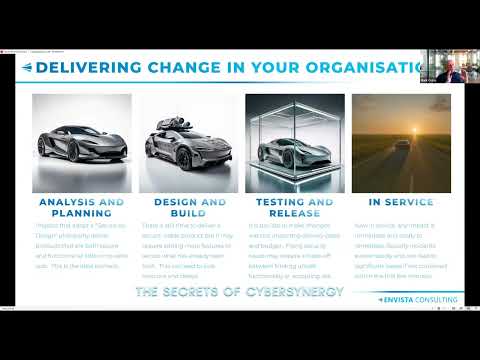
A Day in the Life of a Cybersecurity BA
IIBA Ireland Chapter
Required Education
Leaving Certificate subjects that build a strong foundation include Mathematics, Computer Science, Physics, and Business Studies, with Higher Level Maths particularly valued by higher education institutions. The most common route is a Level 8 Honours Bachelor degree in Cybersecurity, Computer Science, or Information Technology, available at TU Dublin, MTU, ATU, UCD, DCU, and UL, among others; a Level 7 Ordinary Bachelor in Computing or Networking can also provide entry. An alternative route is the Cybersecurity Practitioner apprenticeship (Level 6, via SOLAS), which allows you to earn while you learn and is typically sponsored by an employer. PLC courses in Computing or Networking (Level 5–6, QQI) at Colleges of Further Education can serve as a stepping-stone to higher education or direct employment in junior support roles. Industry certifications such as CompTIA Security+, Certified Ethical Hacker (CEH), or Cisco CyberOps Associate are highly regarded by Irish employers and are often pursued alongside or after a degree. There is no single statutory registration body for cybersecurity professionals in Ireland, though membership of bodies such as ISACA or ISC2 is considered a mark of professional standing.
Required Skills
Career Perspective
Most analysts begin in junior or associate cybersecurity roles, often after completing a degree or the Cybersecurity Practitioner apprenticeship, gaining hands-on experience in security operations centres (SOCs) or IT support teams. With two to four years of experience and additional certifications (such as CISSP or CISM), progression to Senior Cybersecurity Analyst or Security Engineer is typical, with responsibilities expanding to include architecture reviews and incident response leadership. Further advancement can lead to roles such as Security Operations Manager, Information Security Manager, or Chief Information Security Officer (CISO) in larger organisations. Ireland's thriving tech sector, including multinational firms based in Dublin's Silicon Docks and the wider Cyber Ireland cluster, offers well-defined career ladders and frequent opportunities to specialise in areas such as cloud security, digital forensics, or governance, risk, and compliance.
AI Impact on the job
AI-powered tools are already being deployed in threat detection, log analysis, and automated incident response, enabling analysts to process far larger volumes of security data than was previously feasible. Routine tasks such as correlating alerts and filtering false positives are increasingly handled by machine-learning systems, shifting the analyst's focus toward higher-level investigation, decision-making, and strategic planning. At the same time, AI is being weaponised by cybercriminals to craft more sophisticated phishing attacks and malware, meaning the demand for skilled human analysts who can anticipate and counter AI-driven threats is likely to increase rather than decrease. Staying current with AI-augmented security tools and understanding their limitations will become an essential part of the professional skill set.
Career Ladder
→ Cybersecurity Analyst (Current role)
Related Studies
Employers in Ireland
Organisations in Ireland that employ people in this occupation.
Dublin City Centre
Delivers managed security services and threat intelligence for global clients.
Dublin, Mulhuddart
Operates Security Operations Centre protecting enterprise clients across EMEA.
Dublin, Nationwide
Monitors banking infrastructure, manages threats and security incident response.
Dublin
Investigates cybercrime, supports digital forensics and national cyber threats.
Nationwide
Protects critical health IT systems and patient data across national networks.
Dublin City Centre
Analyses threats and secures global payment processing systems and data.
Dublin, Cork
Irish-headquartered MSSP running 24/7 SOC and penetration testing services.
Dublin, Nationwide
Secures critical national energy infrastructure against cyber threats.
Dublin Docklands
Conducts vulnerability assessments and threat analysis across cloud platforms.
Dublin, Cork, Limerick
Provides cybersecurity consulting, audits and risk assessments for Irish clients.
Dublin
Delivers managed security and SOC services to enterprise and public sector clients.
We don't know whether these employers currently have vacancies — always check their own website. And if there's somewhere you'd really love to work, it can be worth applying anyway, even without an open vacancy.
Our tools can help you with that:
This website uses cookies
We use functional cookies and — with your consent — cookies for preferences, statistics and marketing.