Install Findmino as an app for the best experience!
Occupational Therapist
(Rehabilitation Therapist, Ergotherapist, OT, Clinical Occupational Therapist)
Health & Social Care
Salary
€35,000 - €72,000/yr
Level
Professional
Outlook
Growing
Sector
Health & Social Care
What does an Occupational Therapist do?
As an occupational therapist you help people who are experiencing difficulties with everyday activities due to physical illness, injury, disability, or mental health challenges. Your role centres on assessing what a person can and cannot do, then designing personalised programmes to help them regain or develop the skills needed for daily life — whether that means returning to work, managing personal care, or participating in their community. You work closely with patients, their families, GPs, physiotherapists, social workers, and other healthcare professionals across settings such as hospitals, community health centres, schools, and residential care facilities. Day-to-day tasks include conducting assessments, recommending assistive equipment or environmental adaptations, facilitating therapeutic activities, writing clinical reports, and reviewing patient progress.
A Day in the Life
Listen: a day as an Occupational Therapist
You arrive at the community health centre in Sligo at half eight, log into the HSE patient management system, and check your caseload for the day. There are seven appointments scheduled, two home visits, and a stack of referral letters to review before your first client arrives. You make a quick coffee and glance through the notes on a teenager referred by her GP following a traumatic brain injury. You want to have your assessment tools — including the Canadian Occupational Performance Measure — ready before she comes in at nine. The morning assessment runs for an hour. You sit with the young woman and her mother, asking structured questions about what daily tasks she is struggling with: getting dressed, concentrating at school, managing her phone. You take careful notes on paper and later transfer everything into the electronic record. It is methodical work, and you must be precise, because your written report will inform the decisions of her consultant and school.
Videos about Occupational Therapist
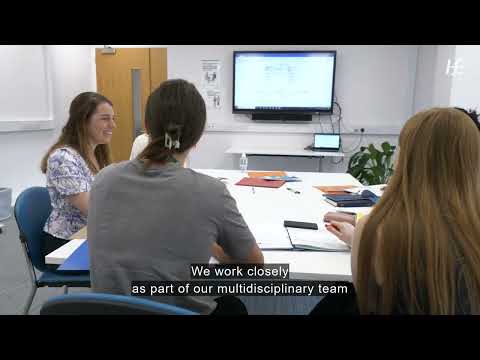
HSE DSKWW Primary Care Occupational Therapy Career Opportunities
HSE DSKWW Community Healthcare CHO7
Required Education
Entry to occupational therapy in Ireland requires completion of an Honours Bachelor of Science in Occupational Therapy (NFQ Level 8), available at TCD, UCC, University of Galway, and UL. Leaving Certificate subjects that strengthen your application include Biology, Chemistry, Physics, and Mathematics at Higher level, along with strong performance in languages and social subjects. Admission is through the CAO, and competition for places is significant, so high points are typically required. On graduation you must register with CORU (the Health and Social Care Professionals Council) before you can practise legally in Ireland. There is currently no PLC or apprenticeship route into qualified occupational therapy practice, though healthcare assistant roles can provide useful experience before or during study. Postgraduate study at NFQ Level 9 or 10 is available for those wishing to specialise or move into research and leadership roles.
Required Skills
Career Perspective
Most occupational therapists begin their careers as staff-grade therapists within the HSE or in private healthcare settings, building clinical experience across different patient populations. With experience, you may progress to Senior Occupational Therapist and then Clinical Specialist or Manager roles, taking on greater clinical complexity and team leadership responsibilities. Some occupational therapists move into academic or research roles, pursue specialist postgraduate qualifications in areas such as hand therapy, mental health, or paediatrics, or develop private practice. Continuing professional development is required for ongoing CORU registration and is supported by the Association of Occupational Therapists of Ireland (AOTI).
AI Impact on the job
AI-powered assessment and monitoring tools are beginning to support occupational therapists by automating routine data collection and helping to identify patterns in patient progress over time. Telehealth and mobile health technologies, already accelerated by the pandemic, continue to expand the reach of occupational therapy services to people in rural or underserved areas of Ireland. However, the deeply human, relational nature of occupational therapy — understanding what is meaningful to a person and motivating behaviour change — means that AI is unlikely to replace the therapist's core role. Instead, AI is expected to free up therapists from administrative burden, allowing more time for direct patient care and complex clinical reasoning.
Career Ladder
→ Occupational Therapist (Current role)
Related Studies
Employers in Ireland
Organisations in Ireland that employ people in this occupation.
Nationwide
Largest OT employer across hospitals, community and disability services
Dublin and surrounding counties
OTs support adults and children with intellectual disabilities
Nationwide
OTs deliver rehabilitation programmes for people with disabilities
Nationwide
OTs support children and adults with physical and complex disabilities
Nationwide
OTs help brain injury survivors regain independence and daily function
Galway, Cork, Roscommon and Nationwide
OTs deliver therapeutic programmes for people with intellectual disabilities
Nationwide
OTs assess and support children's development and family functioning
Dublin and Nationwide
OTs provide primary care occupational therapy in GP-linked clinics
Dublin, with placements Nationwide
Specialist agency placing OTs in public and private healthcare settings
Dún Laoghaire, Co. Dublin
OTs lead specialist rehabilitation for spinal, neurological and trauma patients
We don't know whether these employers currently have vacancies — always check their own website. And if there's somewhere you'd really love to work, it can be worth applying anyway, even without an open vacancy.
Our tools can help you with that:
This website uses cookies
We use functional cookies and — with your consent — cookies for preferences, statistics and marketing.