Install Findmino as an app for the best experience!
Occupational Therapy
Health & Social Care
Duration
4 years
Level
Bachelor
Outlook
Growing
What will you learn?
Occupational therapy (OT) is a health profession focused on enabling people of all ages to participate in meaningful daily activities — or 'occupations' — when illness, disability, injury or mental health challenges affect their functioning. On this four-year honours degree you study human anatomy, physiology, psychology, and occupational science alongside practical therapeutic skills. You learn to assess clients, design intervention programmes and use adaptive equipment and environmental modifications to promote independence. A typical week combines lectures, small-group tutorials, anatomy labs and skills practice. A defining feature of the programme is over 1,000 hours of supervised clinical placement across HSE hospitals, disability services, mental health services, paediatric settings and community care, giving you real-world experience before you graduate.
Videos about Occupational Therapy
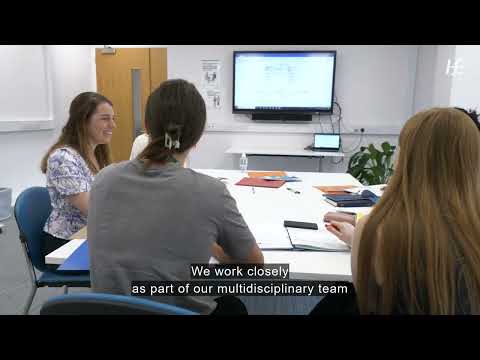
HSE DSKWW Primary Care Occupational Therapy Career Opportunities
Required Education
Entry is through the CAO, and points for occupational therapy programmes at TCD, UCC, University of Galway and UL are consistently high, reflecting strong competition for a limited number of places. You will need to meet minimum Leaving Certificate requirements, typically six subjects including English and Irish at Ordinary level or above, and most programmes require or strongly recommend Higher-level Biology or another science subject such as Chemistry or Physics. Higher-level Maths is not always mandatory but is advantageous. If you do not come directly from the Leaving Certificate, you can apply via a QQI Level 5 or Level 6 award in Health Science or a related area through the FET/QQI links scheme, though specific distinctions are usually required. Mature applicants (aged 23 or over on 1 January of entry) may apply through the mature-student CAO route and are typically interviewed; HEAR and DARE access schemes are also available for eligible applicants.
Core Subjects
Career Prospects
Occupational therapy is a regulated profession in Ireland under CORU, and you must be registered with the Occupational Therapists Registration Board before practising. Demand for qualified occupational therapists in Ireland has been consistently strong, driven by an ageing population, expanded community care under Sláintecare, and growing recognition of mental health needs. Newly qualified OTs generally find employment relatively quickly, and there is ongoing recruitment both within the HSE and in the expanding private and voluntary sector. Starting salaries in the HSE are set by public-sector pay scales and typically range from approximately €35,000 to €43,000 gross per annum, rising considerably with clinical specialist and management grades.
Impact of AI on this program
Artificial intelligence is beginning to influence occupational therapy through AI-powered assistive technologies, digital rehabilitation tools and smart home systems that support independent living for clients with disabilities or age-related conditions. AI-assisted assessment tools and outcome-measurement platforms are emerging, which may streamline administrative and documentation tasks and allow therapists to focus more time on direct client care. However, the core of OT practice — building therapeutic relationships, contextual clinical reasoning and understanding what is meaningful to an individual — remains deeply human and is not readily automated. Students entering the field should develop digital literacy and an ability to critically evaluate new technologies as part of their professional competence.
CAO courses & points
5 CAO courses lead to this qualification. Points shown are last year's Round 1 score.
Occupational Therapy
University College Cork (NUI)
CK704 · NFQ 8
Occupational Therapy
Trinity College Dublin
TR054 · NFQ 8
Occupational Therapy
University of Galway
GY502 · NFQ 8
Occupational Therapy
University of Limerick
LM104 · NFQ 8
Health Science with Occupational Therapy Studies
Atlantic Technological University · Letterkenny
AU171 · NFQ 6
Where can you study this?Providers and indicative points are curated with AI support. Always double-check with the institution itself.
Providers and indicative points are curated with AI support. Always double-check with the institution itself.
CAO points (indicative): 450-560 (2024)
* Indicative only: CAO points change every year. Always check the current points on cao.ie and with the institution.
How to apply
Applications are made through the CAO (cao.ie) by 1 February each year; all four programmes are Level 8 honours degrees and are among the most competitive health science courses, typically requiring Leaving Certificate science subjects and sometimes an interview or supplementary form.
Possible Job Matches
Right after this study
Jobs you qualify for immediatelySimilar Studies
Addiction Studies
This degree prepares you to work directly with individuals and communities affected by substance misuse, behavioural addictions, and related mental...
4 years
BachelorAdvanced Therapeutic Technologies
This degree focuses on the science and clinical application of advanced therapeutic technologies, including cell therapy, gene therapy, and...
4 years
BachelorApplied Social Care
Applied Social Care at honours degree level prepares you to work directly with vulnerable individuals and communities across a wide range of...
4 years
Discover more on Findmino
Other studies, careers, ideas and blogs you might not know yet.
This website uses cookies
We use functional cookies and — with your consent — cookies for preferences, statistics and marketing.