Install Findmino as an app for the best experience!
Physicist
(Medical Physicist, Research Physicist, Applied Physicist, Physics Research Analyst)
Science & Research
Salary
€38,000 - €95,000/yr
Level
Senior
Outlook
Growing
Sector
Science & Research
What does a Physicist do?
As a Physicist you study the fundamental laws governing matter, energy, space, and time, applying that understanding to solve practical and theoretical problems. Depending on your specialisation, you might work in a hospital calibrating radiation equipment for cancer treatment, in a university laboratory investigating quantum materials, or in a technology or pharmaceutical company developing sensors and measurement systems. Your daily work involves designing and conducting experiments, gathering and analysing data, writing up findings, and collaborating with engineers, clinicians, or fellow researchers. You present results to colleagues and stakeholders, contribute to published research or technical reports, and keep up with fast-moving developments in your field.
A Day in the Life
Listen: a day as a Physicist
Your alarm goes off at 7:15 a.m. You work as a medical physicist at a large regional hospital in Cork, employed by the HSE. After a quick coffee, you cycle in and badge through the department entrance by 8:30 a.m. The first thing you do is check the overnight log from the radiotherapy suite to confirm that the linear accelerator — the machine that delivers precise radiation doses to cancer patients — ran its automated morning checks without fault. If any parameter is outside tolerance, treatment cannot start until you sign off on it. By 9:00 a.m. you are on the treatment floor with a dosimetry technician, running a set of output measurements on one of the accelerator heads. You slot a small ionisation chamber — a detector the size of a pen — into a water phantom, a tank of water that mimics human tissue, and record how many monitor units it takes to deliver exactly 2 grays of dose. The data goes straight into your spreadsheet. The numbers are fine today, which is a relief.
Required Education
Most Physics roles in Ireland require at least an NFQ Level 8 Honours Bachelor degree in Physics, Applied Physics, or a closely related discipline such as Theoretical Physics or Mathematical Physics, available at universities including TCD, UCD, UCC, University of Galway, DCU, UL, and Maynooth. Leaving Certificate subjects that give a strong foundation include Physics, Mathematics (Higher Level is strongly recommended), and Chemistry. For research positions in universities or institutes, a Level 9 Masters or Level 10 PhD is typically expected, and many Irish physicists complete structured PhD programmes funded through Science Foundation Ireland. Medical Physicists working in the HSE must hold a postgraduate qualification in Medical Physics and complete a clinical training programme, often leading to registration as a Clinical Scientist. Professional membership of bodies such as the Institute of Physics (IOP) and affiliation with Engineers Ireland can support career progression, particularly in applied or industrial settings.
Required Skills
Career Perspective
Physicists in Ireland often begin their careers as postgraduate researchers or as graduate scientists in industry or the HSE, frequently following completion of a PhD or Masters programme. From there, you might advance to postdoctoral researcher, senior scientist, or clinical scientist roles, taking on greater responsibility for project leadership and mentoring junior colleagues. In academia, progression moves towards lecturer, associate professor, and professor positions, while in industry you might move into senior engineering, R&D management, or technical director roles. Medical Physicists in the HSE follow a structured clinical career ladder, from trainee through to Principal Medical Physicist.
AI Impact on the job
Artificial intelligence is significantly accelerating data analysis in Physics, with machine-learning tools now capable of identifying patterns in large experimental datasets far faster than traditional methods, particularly in particle physics, materials science, and medical imaging. You will increasingly need to work alongside AI-driven simulation and modelling platforms, using them to design experiments and interpret results more efficiently. However, the core scientific judgement, experimental design, and theoretical interpretation that define Physics work remain distinctly human skills that AI cannot replace. Physicists who develop competence in programming and AI tools, alongside their scientific expertise, are well placed to take advantage of these developments.
Career Ladder
→ Physicist (Current role)
Related Studies
Employers in Ireland
Organisations in Ireland that employ people in this occupation.
Dublin Institute for Advanced Studies, Dublin 2
Theoretical and experimental physics research at world-class level
Dublin 2
Astrophysics, geophysics and theoretical physics research conducted here
Dublin 2
Quantum materials, photonics and condensed matter physics research roles
Belfield, Dublin 4
Experimental and computational physics research and academic teaching
Nationwide
Calibrate radiation therapy equipment and ensure patient dosimetry safety
Dublin 8
Medical physicists support radiotherapy and diagnostic imaging departments
Leixlip, Co. Kildare
Physicists develop semiconductor processes and advanced materials characterisation
Galway
Apply physics principles to medical device design and measurement systems
Glasnevin, Dublin 11
Maintain national measurement standards and conduct precision physics calibration
Cork
Photonics, semiconductor and nanotechnology physics research and development
Nationwide
Fund and host physicists across materials, energy and quantum research centres
We don't know whether these employers currently have vacancies — always check their own website. And if there's somewhere you'd really love to work, it can be worth applying anyway, even without an open vacancy.
Our tools can help you with that:
Famous Irish people who did this
Get inspired by people whose path led them to work like a Physicist. Tap a face to read their story.
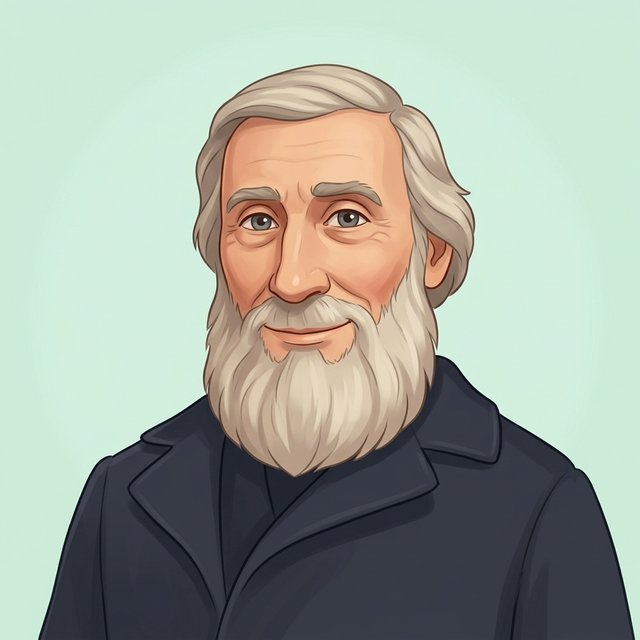
John Tyndall
Physicist
Investigative · Realistic · Conventional
Read their story
Jocelyn Bell Burnell
Astrophysicist
Investigative · Realistic · Artistic
Read their story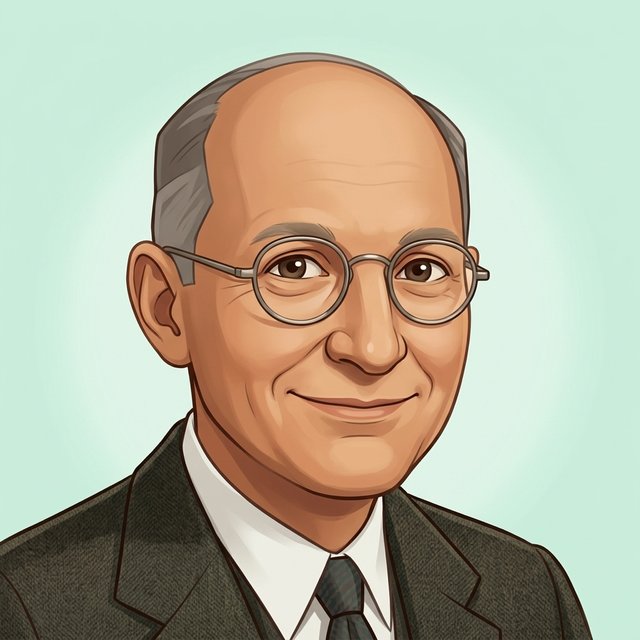
Ernest Walton
Physicist
Investigative · Realistic · Conventional
Read their story
Aoibhinn Ní Shúilleabháin
Physicist & Broadcaster
Investigative · Social · Artistic
Read their storyThis website uses cookies
We use functional cookies and — with your consent — cookies for preferences, statistics and marketing.