Install Findmino as an app for the best experience!
Building Surveying
Tech & Engineering
Duration
4 years
Level
Bachelor
Outlook
Growing
What will you learn?
Building Surveying covers the science and management of buildings throughout their entire life cycle, from design and construction through to maintenance, refurbishment and demolition. You study building technology, structural behaviour, construction materials, and defect diagnosis — often called building pathology. A significant part of the course focuses on practical skills such as conducting condition surveys, preparing Building Energy Rating (BER) assessments, and checking compliance with Building Regulations Parts B (fire safety) and M (access and use). Placements with surveying practices, local authorities, or property companies give you hands-on site experience. A typical week combines lectures, technical drawing or CAD workshops, site visits, and report writing, preparing you for professional practice.
Videos about Building Surveying
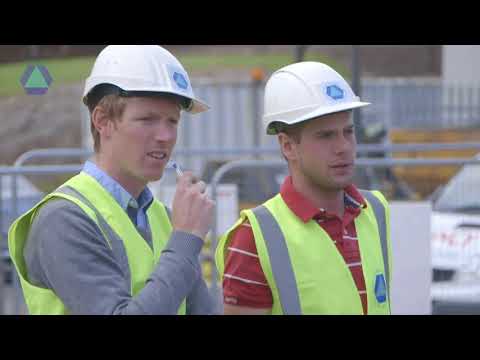
Site Manager Grad Entry Route

Why choose a career in Quantity Surveying?
Required Education
Entry is normally through the CAO with a Leaving Certificate that includes English or Irish and Mathematics, typically at Ordinary level minimum, though Higher-level Maths is advantageous and may be required by some institutions. Useful Leaving Cert subjects include Construction Studies, Physics, Technical Graphics, and Business. CAO points for this programme are generally moderate, though demand can vary by institution. Applicants holding a QQI Level 5 or Level 6 award in Construction Technology, Civil Engineering, or a related discipline may apply through the further education and training (FET) progression route, often with reduced CAO points. Mature applicants aged 23 or over may apply directly and are assessed on relevant work experience, and both HEAR and DARE schemes are available for eligible students.
Core Subjects
Career Prospects
Demand for qualified building surveyors in Ireland remains strong, driven by sustained construction activity, a large national housing programme, and significant investment in retrofit and heritage refurbishment. Graduates who achieve chartered status through the Society of Chartered Surveyors Ireland (SCSI) are particularly well placed in the jobs market. Starting salaries typically range from approximately €32,000 to €40,000 per year, with experienced chartered building surveyors earning €55,000 to €75,000 or more. The profession is well regarded and offers clear progression routes into senior and specialist roles.
Impact of AI on this program
AI and digital tools are beginning to reshape building surveying, particularly in the use of automated defect detection software, drone-assisted condition surveys, and AI-driven energy modelling. Building Information Modelling (BIM) is already embedded in many practices, and graduates are expected to be proficient with these platforms. Routine data entry and basic reporting tasks may become increasingly automated, but the professional judgement required for defect diagnosis, compliance assessment, and client advice remains firmly human-led. Staying current with emerging surveying technology will be an important part of your continuing professional development.
CAO courses & points
2 CAO courses lead to this qualification. Points shown are last year's Round 1 score.
Where can you study this?Providers and indicative points are curated with AI support. Always double-check with the institution itself.
Providers and indicative points are curated with AI support. Always double-check with the institution itself.
CAO points (indicative): 260-400 (2024)
* Indicative only: CAO points change every year. Always check the current points on cao.ie and with the institution.
How to apply
Apply through the CAO (cao.ie) for undergraduate entry; most programmes require Leaving Certificate subjects including Maths and a science or technical subject, with some providers specifying minimum grades. Higher Certificate or Level 6 holders may also apply via the CAO Add-On or direct application to Year 2/3 where articulation pathways exist.
Possible Job Matches
Right after this study
Jobs you qualify for immediatelySimilar Studies
Aircraft Systems Engineering
This programme focuses on the engineering principles underpinning aircraft airframe structures, propulsion systems and avionics, giving you a solid...
4 years
BachelorArchitectural Technology
Architectural Technology focuses on the technical design and construction of buildings, bridging the gap between architecture and engineering. You...
4 years
BachelorArchitecture
Studying architecture at degree level in Ireland involves developing skills in design thinking, technical construction knowledge, environmental...
4 years
Discover more on Findmino
Other studies, careers, ideas and blogs you might not know yet.
This website uses cookies
We use functional cookies and — with your consent — cookies for preferences, statistics and marketing.