Install Findmino as an app for the best experience!
Environmental Science
Environment, Agriculture & Animals
Duration
4 years
Level
Bachelor
Outlook
Growing
What will you learn?
An Environmental Science degree explores how natural systems function and how human activity affects the land, water, air and biodiversity around us. You study ecology, climate science, geology, chemistry and environmental policy, developing both laboratory skills and fieldwork techniques. Practical weeks spent sampling rivers, monitoring air quality or mapping habitats are a regular feature, and many programmes include a research placement with bodies such as the Environmental Protection Agency (EPA), local authorities or environmental consultancies. Some universities offer Erasmus exchange opportunities in European institutions with strong environmental research traditions. By graduation you will be comfortable handling scientific data, writing environmental impact reports and engaging with Ireland's Climate Action Plan targets.
Videos about Environmental Science
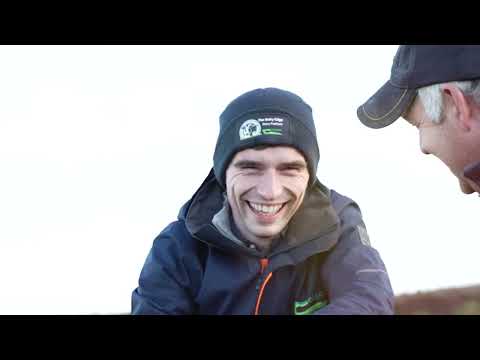
Build a Rewarding Career at Teagasc
Study Ancient History and Archaeology at Trinity College Dublin
Required Education
Entry is typically through the CAO, and competitive points for Environmental Science at universities such as UCD, University of Galway and TCD are generally in the moderate-to-high range. You will normally need a minimum of six subjects in the Leaving Certificate, including English, and most programmes require or strongly recommend Higher Level Mathematics and at least one science subject such as Biology, Chemistry or Physics. Geography is a useful supporting subject. QQI Level 5 or 6 FET/PLC qualifications in science or environmental studies can provide a progression route into Level 7 programmes and, with strong results, into Level 8 courses through the Higher Education Links Scheme. Mature applicants (aged 23 or over) may apply directly to institutions and are assessed on relevant life and work experience, while HEAR and DARE schemes support applicants from disadvantaged or disability backgrounds.
Core Subjects
Career Prospects
Demand for Environmental Science graduates in Ireland is growing steadily, driven by EU environmental directives, Ireland's Climate Action Plan obligations and increased investment in renewable energy infrastructure. Local authorities, the EPA, Uisce Éireann and private consultancies are consistent employers of graduates. The shift toward corporate sustainability reporting is also opening roles in the private sector for graduates with strong data and policy skills. Overall, employment prospects are positive, particularly for those who combine scientific skills with knowledge of Irish and EU environmental legislation.
Impact of AI on this program
Artificial intelligence is increasingly used in environmental monitoring, allowing large volumes of satellite imagery, sensor data and biodiversity records to be analysed far more rapidly than before. As an environmental scientist you will likely use AI-assisted GIS tools and predictive climate modelling software rather than build these systems yourself. AI does not replace the fieldwork, regulatory judgement or stakeholder communication that form much of the day-to-day role. Graduates who are comfortable working with data platforms and digital monitoring tools will be particularly well placed in this evolving landscape.
CAO courses & points
10 CAO courses lead to this qualification. Points shown are last year's Round 1 score.
Environmental Science and Engineering
Trinity College Dublin
TR064 · NFQ 8
Biological, Earth and Environmental Sciences
University College Cork (NUI)
CK404 · NFQ 8
Environmental Science and Technology
Dublin City University
DC166 · NFQ 8
Environmental Science
University of Galway
GY308 · NFQ 8
Environmental Science
University of Limerick
LM066 · NFQ 8
Environmental Science with Ecology
Atlantic Technological University · Sligo
AU966 · NFQ 8
Environmental Science and Sustainable Technology
Munster Technological University · Cork
MT878 · NFQ 8
Science-Biological and Environmental Studies
Munster Technological University · Kerry
MT680 · NFQ 6
Agriculture and Environmental Management
Atlantic Technological University · Mountbellew
AU557 · NFQ 7
Environmental Science with Ecology
Atlantic Technological University · Sligo
AU855 · NFQ 7
Where can you study this?Providers and indicative points are curated with AI support. Always double-check with the institution itself.
Verified yesterday
Providers and indicative points are curated with AI support. Always double-check with the institution itself.
CAO points (indicative): 260-530 (2024)
* Indicative only: CAO points change every year. Always check the current points on cao.ie and with the institution.
How to apply
Applications to undergraduate Environmental Science programmes at universities and technological universities are made through the CAO (cao.ie) with a closing date of 1 February each year. Leaving Certificate results in relevant science subjects (Biology, Chemistry, Geography, Physics) and Maths are typically advantageous for meeting entry requirements.
Similar Studies
Agri-Business and Food Marketing
An Agri-Business and Food Marketing degree blends agricultural science with business, economics and marketing skills relevant to Ireland's agri-food...
4 years
BachelorAgricultural Science
A Bachelor of Agricultural Science introduces you to the science underpinning crop and animal production, land management, and food systems. You will...
4 years
BachelorAnimal Science
Animal Science at degree level covers the biology, nutrition, genetics, and welfare of farmed and companion animals, with a strong emphasis on the...
4 years
BachelorApplied Ecology and Conservation
An Applied Ecology and Conservation degree puts you at the forefront of protecting Ireland's natural habitats and wildlife. You study how ecosystems...
4 years
BachelorArchaeology
Studying Archaeology at degree level introduces you to the human past through excavation, artefact analysis, landscape survey and historical records....
4 years
Discover more on Findmino
Other studies, careers, ideas and blogs you might not know yet.
This website uses cookies
We use functional cookies and — with your consent — cookies for preferences, statistics and marketing.