Install Findmino as an app for the best experience!
Duration
4 years
Level
Bachelor
Outlook
Stable
What will you learn?
Studying Irish at degree level takes you well beyond Leaving Certificate grammar into a rich exploration of modern and classical Irish language, literature, and sociolinguistics. You will analyse texts from medieval manuscripts through to contemporary Gaeltacht fiction and poetry, and examine how Irish functions as a living community language today. Modules typically cover translation, oral communication, dialectology, and the cultural history of Irish-speaking regions. A highlight of most programmes is a residential placement in a Gaeltacht community — often in Connemara, Donegal, or Kerry — where you immerse yourself in everyday spoken Irish. Practical work may include media production, translation exercises, and collaborative projects with Irish-language organisations such as TG4 or Raidió na Gaeltachta.
Videos about Gaeilge (Irish)
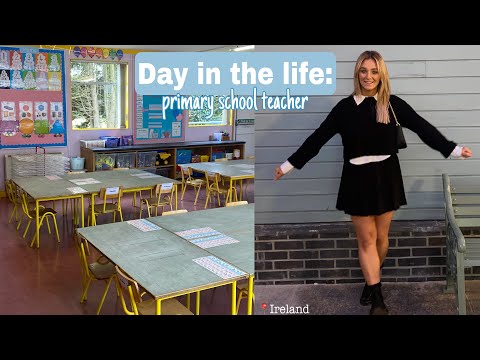
day in the life of a teacher in Ireland // primary school teacher in Dublin
Arts, Your Path to: Working as a Translator
Required Education
Entry is normally through the CAO, requiring a Leaving Certificate with a minimum of six subjects including English and Irish; Higher Level Irish is strongly expected and, in many cases, essential for this degree. CAO points requirements are generally moderate, though combined degrees pairing Irish with another subject at University of Galway or UCC can be competitive. Higher Level Irish at a good grade is the single most important subject. If you do not meet standard entry requirements, a QQI Level 5 or 6 FET award in a humanities or languages area can provide a recognised progression route, particularly at institutes offering Level 7 programmes as a stepping stone. Mature applicants (aged 23 or over) may apply directly without standard Leaving Cert points, and HEAR and DARE schemes offer reduced-points access for eligible applicants.
Core Subjects
Career Prospects
Demand for qualified Irish speakers in education, broadcasting, and public administration remains steady, and fluent graduates are a relatively small pool, which works in your favour. The continued expansion of Irish-medium (Gaelscoil and Gaelcholáiste) education across Ireland sustains consistent demand for qualified teachers. EU translation services in Brussels and Luxembourg also recruit Irish-language translators, as Irish holds official EU language status. While the overall job market for pure-humanities graduates requires flexibility, Irish language graduates with a teaching qualification or bilingual skillset are well placed.
Impact of AI on this program
AI translation tools such as large language models are increasingly capable with major world languages, but Irish remains a lower-resource language where automated translation quality is still unreliable, meaning human expertise retains significant value. University research groups and bodies like Fiontar & Scoil na Gaeilge at DCU are actively involved in developing Irish-language natural language processing tools, so graduates with both linguistic and digital skills are well positioned. AI may assist with corpus analysis and language learning apps, but nuanced literary interpretation, community engagement, and oral dialect work are areas where human judgement remains essential. Overall, AI is more of a research opportunity than a threat in this field.
CAO courses & points
8 CAO courses lead to this qualification. Points shown are last year's Round 1 score.
Oideachas - Bunmhúinteoireacht Trí Mheán na Gaeilge
Marino Institute of Education
CM003 · NFQ 8
Oideachas - Bunmhúinteoireacht Trí Mheán na Gaeilge (daltaí Gaeltachta)
Marino Institute of Education
CM004 · NFQ 8
Education - Gaeilge
University College Cork (NUI)
CK124 · NFQ 8
Post Primary Teacher Ed - Gaeilge with French/German/Spanish
Dublin City University
DC013 · NFQ 8
Education, Gaeilge and Religious Studies
Mary Immaculate College · Thurles
MI018 · NFQ 8
Gnó agus Gaeilge / Business and Irish
Dublin City University
DC118 · NFQ 8
Na Dána (Cumarsáid agus Gaeilge)
University of Galway
GY122 · NFQ 8
Early and Modern Irish
Trinity College Dublin
TR022 · NFQ 8
Where can you study this?Providers and indicative points are curated with AI support. Always double-check with the institution itself.
Providers and indicative points are curated with AI support. Always double-check with the institution itself.
CAO points (indicative): 280-480 (2024)
* Indicative only: CAO points change every year. Always check the current points on cao.ie and with the institution.
How to apply
Undergraduate BA (Hons) programmes in Gaeilge are applied for through the CAO (cao.ie) by 1 February each year, typically as part of a broader Arts degree with Irish as a subject or as a dedicated Celtic/Irish Studies programme. Ulster University uses the UCAS system rather than CAO.
Possible Job Matches
Right after this study
Jobs you qualify for immediatelySimilar Studies
Applied Languages and Translation
In an Applied Languages and Translation degree, you study two or more modern languages alongside the theory and practice of translation and...
4 years
BachelorArchaeology
Studying Archaeology at degree level introduces you to the human past through excavation, artefact analysis, landscape survey and historical records....
4 years
Discover more on Findmino
Other studies, careers, ideas and blogs you might not know yet.
This website uses cookies
We use functional cookies and — with your consent — cookies for preferences, statistics and marketing.