Install Findmino as an app for the best experience!
Paramedic Studies
Health & Social Care
Duration
4 years
Level
Bachelor
Outlook
Growing
What will you learn?
Paramedic Studies at NFQ Level 8 prepares you to work as a registered paramedic providing pre-hospital emergency care across Ireland. You study anatomy, physiology, pharmacology, and clinical decision-making, building the scientific knowledge needed to assess and treat patients in high-pressure situations. A significant portion of your programme is spent on clinical placement with the National Ambulance Service, where you attend real emergency calls alongside experienced paramedics. You also develop skills in areas such as trauma management, cardiac care, paediatric emergencies, and mental health crisis response. A typical week combines campus lectures, simulation laboratory sessions, and scheduled ambulance placements, giving you a balance of theory and hands-on practice.
Videos about Paramedic Studies
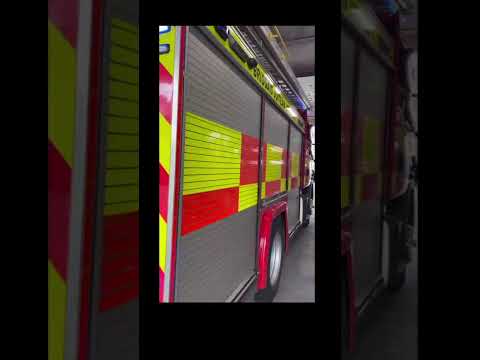
A Day in the Life of a Dublin Fire Brigade Fire Fighter and Paramedic
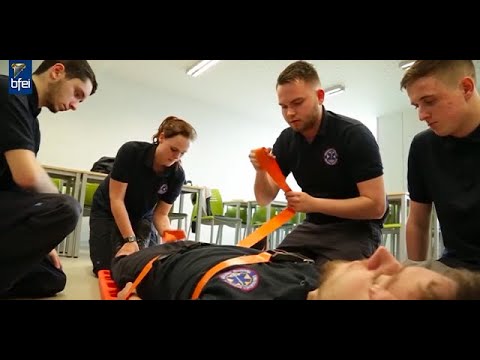
Pre Paramedic Fire and Ambulance Course at Blackrock Further Education Institute - New
Required Education
Entry to the BSc Paramedic Studies at University of Limerick normally requires a Leaving Certificate with a minimum number of passes including English and a science subject such as Biology or Chemistry; Higher Level Maths or Science subjects strengthen your application considerably. CAO points for this programme are competitive, typically described as moderate to high, reflecting strong demand from applicants. If you do not meet the Leaving Certificate requirements directly, a relevant QQI Level 5 or Level 6 FET award in Health Care or Emergency Medical Technology can provide a recognised progression route into the degree. Mature applicants aged 23 or over may apply through the mature student entry pathway and are assessed on relevant experience and aptitude. HEAR and DARE access schemes are available for applicants from socioeconomically disadvantaged backgrounds or with disabilities. You must also meet fitness-for-practice and medical clearance requirements before commencing clinical placements.
Core Subjects
Career Prospects
Demand for registered paramedics in Ireland remains consistently strong, driven by growing population needs and ongoing investment in pre-hospital care infrastructure by the HSE and National Ambulance Service. Graduates who achieve PHECC registration typically find employment relatively quickly, with the National Ambulance Service being the primary public-sector employer. There are also opportunities in private ambulance services, event medical cover, and international aid organisations. Career progression to Advanced Paramedic or specialist retrieval roles is achievable with experience and further CPD.
Impact of AI on this program
Artificial intelligence is beginning to influence pre-hospital care through tools such as AI-assisted dispatch systems, predictive triage algorithms, and remote patient monitoring technologies. As a paramedic, your role centres on direct human assessment and physical intervention in unpredictable environments, which limits the degree to which AI can replace your core responsibilities. However, familiarity with data-driven decision-support tools and electronic patient care records is increasingly expected. Paramedics who understand how AI informs clinical governance and quality improvement will be well positioned in a modernising health service.
CAO courses & points
2 CAO courses lead to this qualification. Points shown are last year's Round 1 score.
Where can you study this?Providers and indicative points are curated with AI support. Always double-check with the institution itself.
Verified 2 days ago
Providers and indicative points are curated with AI support. Always double-check with the institution itself.
CAO points (indicative): 360-470 (2024)
* Indicative only: CAO points change every year. Always check the current points on cao.ie and with the institution.
How to apply
Applications for undergraduate Paramedic Studies programmes are made through the CAO (Central Applications Office) at cao.ie, with a closing date of 1 February for most applicants. Entry requirements typically include specific Leaving Certificate subjects such as Biology or Chemistry, and some programmes require a fitness-to-practise or occupational health assessment prior to entry.
Similar Studies
Addiction Studies
This degree prepares you to work directly with individuals and communities affected by substance misuse, behavioural addictions, and related mental...
4 years
BachelorAdvanced Therapeutic Technologies
This degree focuses on the science and clinical application of advanced therapeutic technologies, including cell therapy, gene therapy, and...
4 years
BachelorApplied Social Care
Applied Social Care at honours degree level prepares you to work directly with vulnerable individuals and communities across a wide range of...
4 years
This website uses cookies
We use functional cookies and — with your consent — cookies for preferences, statistics and marketing.