Install Findmino as an app for the best experience!
Polymer and Plastics Engineering
Tech & Engineering
Duration
4 years
Level
Bachelor
Outlook
Stable
What will you learn?
Studying Polymer and Plastics Engineering, you will explore the science and processing of polymeric materials, from everyday packaging to high-performance medical devices. The programme covers materials science, polymer chemistry, manufacturing processes such as injection moulding and extrusion, and quality control. Practical laboratory and workshop sessions form a significant part of your week, giving you hands-on experience with industrial-grade machinery and materials testing equipment. Many programmes include a work placement year, often in medtech or packaging companies across the north-west and midlands. You will also develop skills in product design, CAD modelling, and process optimisation, preparing you for Ireland's thriving polymer manufacturing sector.
Videos about Polymer and Plastics Engineering
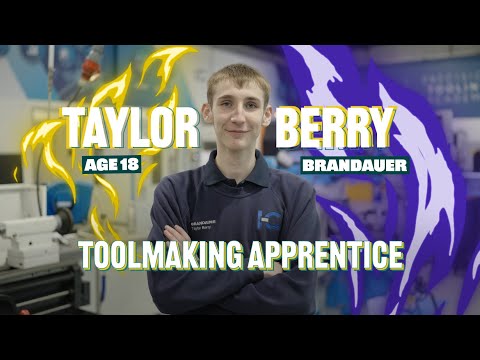
Taylor: Toolmaking Apprentice
Required Education
Entry typically requires a Leaving Certificate with a minimum of six subjects, including Mathematics and English or Irish at Ordinary level as a minimum, though Higher-level Maths is strongly advantageous. Subjects such as Physics, Chemistry, Engineering, and Applied Mathematics are highly relevant and may strengthen your application. CAO points requirements for this programme are generally moderate, reflecting the specialist nature of the field. If you hold a QQI Level 5 or Level 6 award in Engineering, Manufacturing, or Science, you may be eligible to apply through the FET/PLC progression route, sometimes with advanced entry to Year 2. Mature applicants aged 23 or over may apply directly through the CAO mature-student pathway, and HEAR and DARE access schemes are available to eligible applicants.
Core Subjects
Career Prospects
Ireland's medtech sector is one of the largest in Europe, and polymer engineers are in steady demand to support device manufacturing and compliance with stringent quality standards. The packaging industry is also undergoing significant investment in sustainable and bio-based materials, creating new opportunities for specialists in this area. Graduate unemployment in engineering disciplines in Ireland is consistently low, and this specialised degree positions you well in a field with relatively few direct competitors on the jobs market.
Impact of AI on this program
Artificial intelligence and machine learning are increasingly being applied to process monitoring and defect detection in injection moulding and extrusion lines, reducing scrap rates and improving yield. As a graduate, you will likely work alongside AI-driven quality inspection systems and predictive maintenance platforms in modern manufacturing plants. While AI automates certain repetitive inspection and data-logging tasks, the hands-on engineering judgement, process troubleshooting, and materials expertise that this degree develops remain firmly human-led skills.
Where can you study this?Providers and indicative points are curated with AI support. Always double-check with the institution itself.
Verified yesterday
Providers and indicative points are curated with AI support. Always double-check with the institution itself.
CAO points (indicative): 270-380 (2024)
* Indicative only: CAO points change every year. Always check the current points on cao.ie and with the institution.
How to apply
Apply through the Central Applications Office (CAO) at cao.ie for undergraduate entry; a Leaving Certificate with minimum grades in Mathematics and a science subject is typically required, and some providers also accept QQI FET Level 5/6 awards through the CAO linked awards scheme.
Possible Job Matches
Right after this study
Jobs you qualify for immediatelySimilar Studies
Aircraft Systems Engineering
This programme focuses on the engineering principles underpinning aircraft airframe structures, propulsion systems and avionics, giving you a solid...
4 years
BachelorArchitectural Technology
Architectural Technology focuses on the technical design and construction of buildings, bridging the gap between architecture and engineering. You...
4 years
Discover more on Findmino
Other studies, careers, ideas and blogs you might not know yet.
This website uses cookies
We use functional cookies and — with your consent — cookies for preferences, statistics and marketing.