Install Findmino as an app for the best experience!
Sport and Exercise Science
Health & Social Care
Duration
4 years
Level
Bachelor
Outlook
Growing
What will you learn?
Sport and Exercise Science explores the scientific principles underpinning human physical performance and health. You study physiology, biomechanics, psychology, and nutrition, gaining a thorough understanding of how the body responds to exercise and training. Practical laboratory work is central to the programme — you will analyse movement, measure cardiovascular responses, and assess body composition using industry-standard equipment. Many programmes include work placements with sports clubs, elite performance academies, or community health organisations, and some offer Erasmus exchange opportunities in Europe. A typical week combines lectures, lab sessions, and field-based testing, often alongside real athletes or community groups connected to GAA, IRFU, or FAI performance structures.
Videos about Sport and Exercise Science
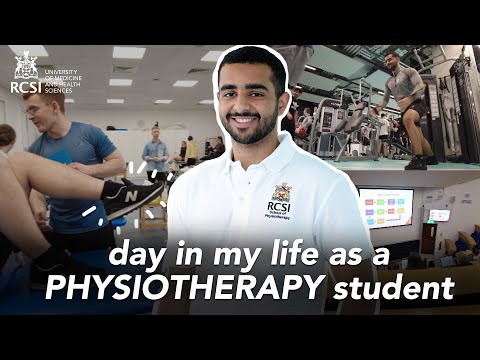
Day in the Life of an RCSI Physiotherapy Student | Lectures, Movement Lab and Dublin Student Life
Required Education
Entry is through the CAO system, with points typically competitive to high depending on the institution. You will generally need a minimum of six subjects in the Leaving Certificate, including English and Mathematics (Ordinary level as a minimum, though Higher-level Maths strengthens your application). Biology and/or Chemistry are highly useful and may be required or strongly recommended at Higher level by some institutions. QQI Level 5 or 6 awards in Sport, Fitness, or Health Sciences from a PLC college offer a recognised progression route for applicants without traditional Leaving Certificate entry. Mature students (aged 23 or over) may apply directly through the CAO and are assessed on relevant experience and aptitude. HEAR and DARE access schemes are available at all four institutions for eligible applicants.
Core Subjects
Career Prospects
Demand for sport and exercise science graduates in Ireland has grown steadily, driven by increased investment in elite sport pathways and a wider public health emphasis on physical activity. Roles in strength and conditioning and performance analysis are competitive, and many early-career graduates supplement income through coaching or fitness instruction while building experience. Salaries for graduate roles typically range from approximately €28,000 to €38,000 per year, with experienced performance specialists and chartered practitioners earning considerably more. Postgraduate qualifications and professional accreditation (for example, with BASES UK or NSCA) significantly improve employment prospects.
Impact of AI on this program
AI and data analytics are increasingly used in performance monitoring, with wearable technology and machine learning helping coaches and scientists interpret large volumes of athlete data in real time. As a graduate, you will be expected to be comfortable working with data platforms and video analysis software that increasingly incorporate AI-driven features. However, the human skills of coaching, motivation, and clinical assessment remain central to the profession and are not easily automated. Understanding how to critically evaluate AI-generated insights will become an important graduate competency.
CAO courses & points
20 CAO courses lead to this qualification. Points shown are last year's Round 1 score.
Health and Performance Science
University College Dublin (NUI)
DN425 · NFQ 8
Sport Science and Health
Dublin City University
DC202 · NFQ 8
Sport and Exercise Sciences
University of Limerick
LM089 · NFQ 8
Sport and Exercise Management
University College Dublin (NUI)
DN430 · NFQ 8
Sports Science and Health
Technological University Dublin · Tallaght
TU936 · NFQ 8
Sports Science and Health
Technological University Dublin · Tallaght
TU736 · NFQ 7
Business with Sport Science
Maynooth University
MH412 · NFQ 8
Sport Science and Health
Maynooth University
MH221 · NFQ 8
Sport and Exercise Science
South East Technological University · Carlow
SE905 · NFQ 8
Sport and Exercise Science
Atlantic Technological University · Galway
AU662 · NFQ 8
Sport and Exercise Management
Munster Technological University · Cork
MT910 · NFQ 8
Health and Leisure with Massage
Munster Technological University · Kerry
MT912 · NFQ 8
Where can you study this?Providers and indicative points are curated with AI support. Always double-check with the institution itself.
Verified 2 days ago
Providers and indicative points are curated with AI support. Always double-check with the institution itself.
CAO points (indicative): 290-500 (2024)
* Indicative only: CAO points change every year. Always check the current points on cao.ie and with the institution.
How to apply
Applications for undergraduate BSc (Hons) programmes in Sport and Exercise Science are made through the Central Applications Office (CAO) at cao.ie, with a normal closing date of 1 February. Entry requirements typically include Leaving Certificate results with specific grades in Biology, Physical Education, or Mathematics depending on the institution.
Possible Job Matches
Right after this study
Jobs you qualify for immediatelyGames Development Officer
€30,000 - €55,000
ProfessionalGym Manager
€30,000 - €55,000
OperationalSailing Instructor
€22,000 - €38,000
ProfessionalSports Performance Analyst
€28,000 - €65,000
ProfessionalGolf Professional
€26,000 - €60,000
ProfessionalAquatics Manager
€35,000 - €58,000
ProfessionalSports Programme Coordinator
€32,000 - €58,000
ProfessionalProfessional Athlete
€25,000 - €500,000
ProfessionalDietetic Technician
€30,000 - €48,000
Similar Studies
Addiction Studies
This degree prepares you to work directly with individuals and communities affected by substance misuse, behavioural addictions, and related mental...
4 years
BachelorAdvanced Therapeutic Technologies
This degree focuses on the science and clinical application of advanced therapeutic technologies, including cell therapy, gene therapy, and...
4 years
BachelorApplied Social Care
Applied Social Care at honours degree level prepares you to work directly with vulnerable individuals and communities across a wide range of...
4 years
Discover more on Findmino
Other studies, careers, ideas and blogs you might not know yet.
This website uses cookies
We use functional cookies and — with your consent — cookies for preferences, statistics and marketing.