Install Findmino as an app for the best experience!
Actor
(Actress, Theatre Performer, Drama Actor, Screen Actor)
Creative & Media
Salary
€18,000 - €70,000/yr
Level
Operational
Outlook
Stable
Sector
Creative & Media
What does an Actor do?
As an actor you bring characters to life on stage, screen, or radio, using your voice, body, and emotional range to tell a story. Your working day might involve attending rehearsals, learning lines from a script, taking direction from a director, or performing before a live audience or camera crew. You collaborate closely with fellow actors, directors, set designers, costume designers, and producers to realise a creative vision. Work can range from theatre productions in venues such as the Abbey Theatre or the Gate Theatre, to television drama, film sets, radio plays, commercials, and corporate training videos. The nature of the work is often project-based, meaning you move between productions and frequently work on a freelance basis.
A Day in the Life
Listen: a day as an Actor
You are two weeks into rehearsals for a new production at a mid-sized Dublin theatre, and your call time is 10:00. You arrive at the rehearsal room — a plain, bright-lit space above the theatre proper — with your annotated script in hand. The director runs a quick warm-up session: breath work, vocal scales, and a physical exercise to loosen the body. It feels a bit awkward at first, but you learn quickly that cold muscles and a tense voice are an actor's worst enemies. From about 10:30 you begin blocking a difficult scene — working out exactly where each actor moves on stage and when. The director stops the run repeatedly to adjust positions or ask you to try a line a different way. This is the unglamorous core of rehearsal: repetition, small corrections, and patient experimentation rather than big emotional performances.
Videos about Actor
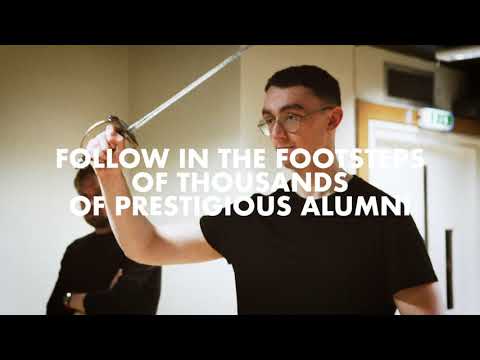
Two Year Full-Time Actor Training: Applications now open
The Gaiety School of Acting - The National Theatre School of Ireland
Required Education
There is no single mandatory academic route into acting, but formal training greatly improves your prospects. Leaving Certificate subjects such as English, Drama (where offered), Music, and Irish are useful for developing the core skills of voice, text analysis, and performance. Many Irish actors train at dedicated drama schools such as the Gaiety School of Acting in Dublin, which offers full-time performance programmes at NFQ Level 7, or at institutions such as DIT Conservatory of Music and Drama (now TU Dublin), IADT, or drama departments within universities. Some performers pursue a Bachelor of Arts in Drama, Theatre Studies, or Performing Arts at universities including University College Cork, University of Galway, or DCU. PLC courses in Performing Arts at Colleges of Further Education can provide an accessible stepping stone and portfolio of experience before progressing to a degree programme. Equity Ireland is the representative trade union for professional performers and joining it is an important step in establishing a professional career.
Required Skills
Career Perspective
Most actors begin by building experience through amateur theatre, school productions, college drama societies, and short films before seeking professional work. Early professional roles are often small parts in theatre touring productions, television commercials, or supporting roles in Irish-language productions for TG4, which provides a valuable entry point for Irish-speaking performers. With a growing body of work, you may secure representation through a talent agent, take on more substantial roles, and build a reputation across theatre, screen, and radio. Experienced actors may diversify into directing, teaching drama, voice acting, or facilitating drama-in-education programmes to supplement their income and develop their careers further.
AI Impact on the job
AI-generated imagery and voice synthesis tools are beginning to create synthetic performances, raising questions about the long-term use of background and voice actors in certain commercial contexts. However, the emotional depth, spontaneity, and physical presence that live and screen actors provide remain genuinely difficult to replicate, particularly for principal roles and live performance. AI tools are increasingly used in production pipelines for tasks such as dubbing, de-ageing, and crowd simulation, which may reduce demand for some supporting work. Actors who develop skills in voice-over, motion capture, and performance capture are likely to find new opportunities as these technologies evolve.
Career Ladder
→ Actor (Current role)
Related Studies
Employers in Ireland
Organisations in Ireland that employ people in this occupation.
Dublin 1
Ireland's national theatre employing actors in major stage productions.
Dublin 1
Prestigious Dublin theatre staging classic and contemporary productions.
Galway city
Leading Irish theatre company touring nationally and internationally.
Donnybrook, Dublin 4
Actors perform in TV dramas, radio plays, and broadcast productions.
Baile na hAbhann, Co. Galway
Irish-language broadcaster commissioning drama series and film roles.
Dublin
Irish production company hiring actors for TV and film projects.
Dublin
Major Irish theatre producer staging award-winning performances nationwide.
Dublin
New writing theatre company developing and casting Irish actors regularly.
Dublin
Contemporary Irish theatre company casting actors for stage productions.
Dublin
International studio employing Irish and international actors on productions.
Cork city
Innovative site-specific theatre company casting actors for unique productions.
We don't know whether these employers currently have vacancies — always check their own website. And if there's somewhere you'd really love to work, it can be worth applying anyway, even without an open vacancy.
Our tools can help you with that:
Famous Irish people who did this
Get inspired by people whose path led them to work like a Actor. Tap a face to read their story. · 13 in total, showing 4 at random




This website uses cookies
We use functional cookies and — with your consent — cookies for preferences, statistics and marketing.