Install Findmino as an app for the best experience!
Special Needs Assistant (SNA)
(Special Educational Needs Assistant, SEN Teaching Assistant, Classroom Support Assistant, Inclusive Education Assistant)
Education & Training
Salary
€27,000 - €43,000/yr
Level
Operational
Outlook
Growing
Sector
Education & Training
What does a Special Needs Assistant (SNA) do?
As a Special Needs Assistant (SNA) you work alongside classroom teachers to support students with a range of physical, intellectual, and emotional needs in primary and post-primary schools across Ireland. Your day-to-day duties include helping students with personal care tasks such as eating, mobility, and bathroom breaks, as well as supporting them during lessons, on school buses, and in the playground. You work closely with class teachers, special education teachers, parents, and other professionals such as speech and language therapists and occupational therapists to ensure each student's individual needs are met. You monitor and record students' behaviour and progress, and help create a safe, inclusive environment where every learner can participate and thrive.
A Day in the Life
Listen: a day as a Special Needs Assistant (SNA)
You arrive at school at 8.30 a.m., well before the first bell. You check the classroom with the special education teacher, making sure any mobility aids, communication boards, or sensory equipment are in place for the students you support. You review the notes you wrote yesterday about one student's anxiety levels and flag a concern to the class teacher before the day begins. At 9.00 a.m. the students arrive. You meet two of your assigned students at the school gate, one of whom uses a wheelchair. You assist with getting him settled into the classroom, repositioning his seating support and helping him unpack. Another student needs reassurance during the transition from the bus; you walk with her, keeping your tone calm and your pace steady.
Videos about Special Needs Assistant (SNA)
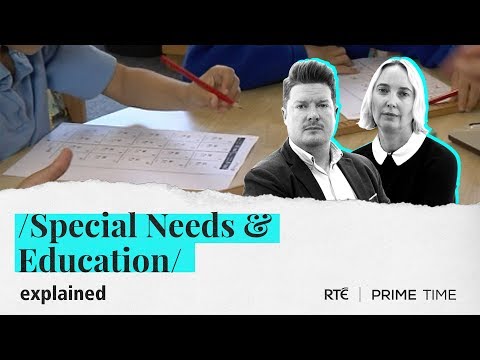
Special Needs & Education | Explained By Prime Time
RTÉ - IRELAND’S NATIONAL PUBLIC SERVICE MEDIA
Required Education
A Leaving Certificate is the typical starting point, and subjects such as Home Economics, Biology, LCVP, and Applied Social Studies can be useful background. The most common entry route is a QQI Level 5 or Level 6 PLC course in Special Needs Assisting, Care Work, or Early Childhood Care and Education, available through Colleges of Further Education and ETBs across Ireland. Some candidates hold or go on to complete a Level 7 or Level 8 degree in areas such as Social Care, Early Childhood Education, or Applied Social Studies, which can broaden career options. SNAs employed in Department of Education-funded schools are hired under specific DEIS and Department of Education circulars, and new entrants are typically required to hold at least a QQI Level 5 award in a relevant care or education discipline. There is no single statutory professional register for SNAs, but the Department of Education sets minimum qualification criteria and candidates are subject to Garda vetting under the National Vetting Bureau Acts.
Required Skills
Career Perspective
Most SNAs begin their careers after completing a QQI Level 5 or Level 6 PLC course and securing a position in a primary or post-primary school, often starting in a fixed-term or part-time capacity. With experience, SNAs can take on more complex caseloads, mentor newer colleagues, or specialise in supporting students with particular needs such as autism, physical disabilities, or emotional and behavioural difficulties. Further study towards a Level 7 or Level 8 degree in Social Care or Special Education can open pathways into roles such as special education teacher (subject to Teaching Council requirements), social care worker, or educational support coordinator. Some experienced SNAs move into roles within HSE services, residential care, or early intervention settings.
AI Impact on the job
AI tools are beginning to support SNAs through assistive technologies such as augmentative and alternative communication (AAC) devices, AI-powered speech-to-text applications, and adaptive learning platforms that personalise tasks for students with additional needs. These technologies can reduce administrative burden and help SNAs track student progress more systematically. However, the core of an SNA's work — physical care, emotional support, and the building of trusting human relationships — cannot be replicated by AI, meaning the role is unlikely to be significantly displaced by automation. SNAs who develop digital literacy and familiarity with assistive technology tools will be better placed to enhance the learning experience of the students they support.
Career Ladder
→ Special Needs Assistant (SNA) (Current role)
Related Studies
Early Learning and Care (QQI Level 5)
1 year • Education & Training
BachelorIrish Sign Language and English Interpreting
4 year • Languages & Humanities
FETSpecial Needs Assisting (QQI Level 6)
1 year • Education & Training
BachelorInclusive Practice for Special Needs Assistance
4 year • Education & Training
Employers in Ireland
Organisations in Ireland that employ people in this occupation.
Nationwide
SNAs allocated to primary schools supporting students with additional needs
Nationwide
SNAs support secondary students with physical, intellectual and emotional needs
Nationwide
SNAs work in multi-denominational schools supporting diverse student needs
Nationwide
SNAs employed across Catholic primary and post-primary school network
Cork
Support roles in specialist schools for people with intellectual disabilities
Dublin, Cork, Galway, Nationwide
SNAs support children with physical and complex needs in specialist schools
Dublin and surrounding counties
SNAs assist students with intellectual disabilities in specialist school settings
Galway, Roscommon, Cork, Limerick
SNAs work in specialist schools supporting children with additional needs
Nationwide
SNAs support students with disabilities in educational and training settings
Nationwide
ETB schools employ SNAs across vocational and community college networks
Dublin, Nationwide
SNAs support children with Down syndrome in mainstream and specialist schools
We don't know whether these employers currently have vacancies — always check their own website. And if there's somewhere you'd really love to work, it can be worth applying anyway, even without an open vacancy.
Our tools can help you with that:
Search Current Vacancies
Tip: These links take you to current vacancies for Special Needs Assistant (SNA) in Ireland
Discover more on Findmino
Other studies, careers, ideas and blogs you might not know yet.
This website uses cookies
We use functional cookies and — with your consent — cookies for preferences, statistics and marketing.