Install Findmino as an app for the best experience!
Game Design and Development
Tech & Engineering
Duration
4 years
Level
Bachelor
Outlook
Growing
What will you learn?
Game Design and Development blends creative design with technical programming to produce interactive digital experiences. You study the full game production pipeline, from concept and narrative design through to coding, animation, and user interface work. Modules typically cover 2D and 3D game engines such as Unity and Unreal Engine, alongside programming languages like C# and C++. Practical studio projects dominate your timetable; by final year you are producing a substantial portfolio piece, often in a small team replicating industry practice. Some programmes include work placement semesters with Irish or international studios, and selected students may pursue Erasmus exchanges at European game development institutions.
Videos about Game Design and Development

Deirdre Arnold of FIT Ltd speaks about apprenticeships as a software developer
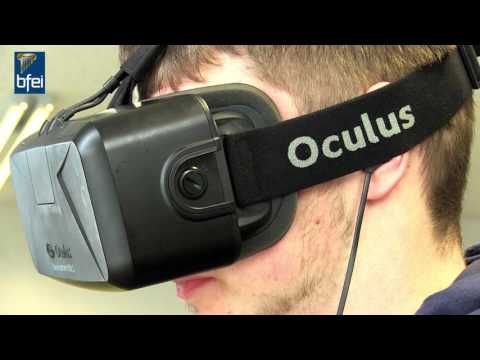
Games Design & Development Course - Blackrock Further Education Institute
Required Education
Entry is through the CAO, and points for established programmes at IADT and ATU are typically moderate to high, reflecting strong competition for limited places. A Leaving Certificate with at least six subjects is required, and most programmes specify O6/H7 in English and Mathematics at Ordinary level as a minimum; Higher-level Maths is advantageous for programming-heavy pathways. No single science subject is compulsory, but Design, Art, Physics, or Computer Science at Leaving Cert level strengthens your application considerably. QQI Level 5 or 6 FET awards in Creative Media, Computing, or Animation offer a recognised progression route for applicants without traditional Leaving Cert results. Mature applicants aged 23 or over may apply directly and are assessed on relevant experience and portfolio; HEAR and DARE supplementary admission schemes are available at participating institutions.
Core Subjects
Career Prospects
Demand for game development skills in Ireland has grown steadily, supported by the presence of international studios and a thriving independent games scene. Graduate employment rates from established programmes are generally strong, though the global games industry can experience periodic layoffs, so a versatile technical portfolio matters greatly. Graduates who combine solid programming ability with design literacy tend to find the broadest opportunities, including freelance and contract work. Salaries for junior roles in Ireland typically start in the range of €28,000 to €38,000 gross annually, rising significantly with experience and specialisation.
Impact of AI on this program
Artificial intelligence is already embedded in game development through procedural content generation, AI-driven non-player character behaviour, and automated playtesting tools. Generative AI tools are increasingly used for rapid prototyping of assets, dialogue, and level layouts, which is changing how junior artists and designers work on early production stages. Your programme will likely introduce you to these tools as part of the curriculum, framing them as productivity aids rather than replacements for core creative and technical skills. Programmers and designers who understand both the capabilities and the limitations of AI tools are expected to be particularly employable as the industry matures.
CAO courses & points
11 CAO courses lead to this qualification. Points shown are last year's Round 1 score.
Game Design
Technological University Dublin · Grangegorman
TU984 · NFQ 8
Game Design
Dun Laoghaire Institute of Art, Design and Technology
DL854 · NFQ 8
Computer Games Development
South East Technological University · Carlow
SE607 · NFQ 8
Software Design for Virtual Reality and Gaming
Technological University of the Shannon · Athlone
US821 · NFQ 8
Software Design for Virtual Reality and Gaming
Technological University of the Shannon · Athlone
US713 · NFQ 7
Computing - Games Design and Development
Technological University of the Shannon · Thurles
US828 · NFQ 8
Computer Games Development
Atlantic Technological University · Letterkenny
AU260 · NFQ 7
Augmented and Virtual Reality
Dundalk Institute of Technology
DK722 · NFQ 7
Games Development
Atlantic Technological University · Sligo
AU848 · NFQ 7
Computing in Games Development
Dundalk Institute of Technology
DK820 · NFQ 8
Computing in Games Development
Dundalk Institute of Technology
DK720 · NFQ 7
Where can you study this?Providers and indicative points are curated with AI support. Always double-check with the institution itself.
Verified yesterday
Providers and indicative points are curated with AI support. Always double-check with the institution itself.
CAO points (indicative): 260-390 (2024)
* Indicative only: CAO points change every year. Always check the current points on cao.ie and with the institution.
How to apply
Applications for undergraduate BSc (Hons) programmes are made through the CAO (www.cao.ie) by 1 February for equal consideration, with a closing date of 1 May for late applications. Entry typically requires a minimum of 2 H5s and 4 O6s/H7s in Leaving Certificate, with Mathematics commonly specified as a required or recommended subject.
Similar Studies
Aircraft Systems Engineering
This programme focuses on the engineering principles underpinning aircraft airframe structures, propulsion systems and avionics, giving you a solid...
4 years
BachelorArchitectural Technology
Architectural Technology focuses on the technical design and construction of buildings, bridging the gap between architecture and engineering. You...
4 years
Discover more on Findmino
Other studies, careers, ideas and blogs you might not know yet.
This website uses cookies
We use functional cookies and — with your consent — cookies for preferences, statistics and marketing.