Install Findmino as an app for the best experience!
Physiotherapy
Health & Social Care
Duration
4 years
Level
Bachelor
Outlook
Growing
What will you learn?
A Physiotherapy degree teaches you how to assess, diagnose, and treat physical conditions affecting movement, function, and quality of life. You will study anatomy, physiology, biomechanics, and neuroscience alongside dedicated clinical modules covering musculoskeletal, neurological, respiratory, and paediatric physiotherapy. A significant part of your degree is spent on supervised clinical placements in hospitals, community health centres, and specialist clinics, accumulating over 1,000 hours of hands-on patient contact. In a typical week you might attend lectures in the morning, practise manual therapy techniques in a skills laboratory with fellow students, and spend two or three days on placement in an acute hospital setting. Some programmes offer Erasmus exchange opportunities in European partner institutions. You graduate with both strong scientific knowledge and the practical clinical skills required to work independently as a registered physiotherapist.
Videos about Physiotherapy
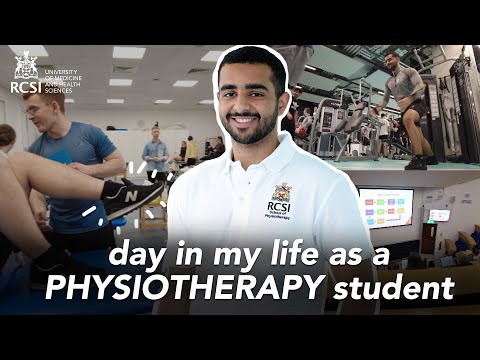
Day in the Life of an RCSI Physiotherapy Student | Lectures, Movement Lab and Dublin Student Life
Required Education
Entry is through the CAO and is extremely competitive, with points requirements consistently among the highest of any health science programme in Ireland. You will typically need a minimum of six subjects in the Leaving Certificate, including English and Mathematics, with several institutions requiring Higher Level Biology and at least one other science subject such as Chemistry or Physics. CAO points are very high, reflecting intense demand for limited places. If you do not meet school-leaving requirements directly, a relevant QQI Level 5 or Level 6 FET award in Health Science or Science can provide a progression route to some programmes, though competition remains strong. Mature applicants aged 23 or over may apply through the mature student pathway, and HEAR and DARE schemes offer reduced-points access for eligible candidates from socioeconomic or disability backgrounds.
Core Subjects
Career Prospects
Graduate employment prospects are strong, with demand for physiotherapists consistently high across the HSE, private healthcare, and community care sectors in Ireland. An ageing population, growing chronic disease burden, and expanding primary care networks are all driving sustained demand for qualified physiotherapists. Newly qualified graduates generally find employment relatively quickly, and there are clear promotional pathways from staff grade through to senior, clinical specialist, and management grades within the HSE. Internationally recognised qualifications also make Irish-trained physiotherapists competitive in the UK, Australia, Canada, and across the EU.
Impact of AI on this program
Artificial intelligence is beginning to influence physiotherapy through AI-assisted movement analysis, wearable sensor technology, and digital rehabilitation platforms that support remote patient monitoring and exercise adherence. These tools are likely to enhance assessment and enable more personalised treatment planning rather than replace the hands-on clinical skills at the core of physiotherapy practice. You will need to develop digital literacy and a critical understanding of AI-generated data to integrate these technologies safely and effectively. The therapeutic relationship, manual therapy, and clinical reasoning that define good physiotherapy remain distinctly human skills that AI cannot replicate.
CAO courses & points
6 CAO courses lead to this qualification. Points shown are last year's Round 1 score.
Physiotherapy
University of Limerick
LM100 · NFQ 8
Physiotherapy
University College Dublin (NUI)
DN420 · NFQ 8
Physiotherapy
Trinity College Dublin
TR053 · NFQ 8
Physiotherapy
RCSI University of Medicine & Health Sciences
RC004 · NFQ 8
Physiotherapy
Atlantic Technological University · Letterkenny
AU374 · NFQ 8
Health Science with Physiotherapy Studies
Atlantic Technological University · Letterkenny
AU170 · NFQ 6
Where can you study this?Providers and indicative points are curated with AI support. Always double-check with the institution itself.
Verified yesterday
Providers and indicative points are curated with AI support. Always double-check with the institution itself.
CAO points (indicative): 500-570 (2024)
* Indicative only: CAO points change every year. Always check the current points on cao.ie and with the institution.
How to apply
Physiotherapy programmes in the Republic of Ireland are applied for through the CAO (cao.ie) with a closing date of 1 February (1 July for late applications); all programmes require a high Leaving Certificate points score and most additionally require specific subjects such as Biology and Chemistry, as well as healthcare-related work experience or interviews at some institutions.
Possible Job Matches
Right after this study
Jobs you qualify for immediatelySimilar Studies
Addiction Studies
This degree prepares you to work directly with individuals and communities affected by substance misuse, behavioural addictions, and related mental...
4 years
BachelorAdvanced Therapeutic Technologies
This degree focuses on the science and clinical application of advanced therapeutic technologies, including cell therapy, gene therapy, and...
4 years
BachelorApplied Social Care
Applied Social Care at honours degree level prepares you to work directly with vulnerable individuals and communities across a wide range of...
4 years
Discover more on Findmino
Other studies, careers, ideas and blogs you might not know yet.
This website uses cookies
We use functional cookies and — with your consent — cookies for preferences, statistics and marketing.