Install Findmino as an app for the best experience!
Mechanical Engineer
(Process Engineer, Paper Mill Process Engineer, Pulp and Paper Engineer, Manufacturing Engineer)
Engineering & Manufacturing
Salary
€38,000 - €85,000/yr
Level
Professional
Outlook
Stable
Sector
Engineering & Manufacturing
What does a Mechanical Engineer do?
As a Mechanical Engineer specialising in paper and pulp production, you oversee the manufacture of paper and related products, ensuring that every stage of the process runs efficiently and to specification. You select and assess the quality of raw materials such as wood pulp and chemical additives, and you monitor machinery and equipment to optimise their performance throughout the production cycle. You work closely with quality control teams, production supervisors, and chemical engineers to troubleshoot problems and implement process improvements. Compliance with health, safety, and environmental legislation is a core part of your daily responsibilities, and you regularly review production data to identify opportunities to reduce waste and improve output.
A Day in the Life
Listen: a day as a Mechanical Engineer
You arrive at the mill just before 7:30 a.m., pulling on your hard hat, safety glasses and steel-toed boots before signing into the site log. Your first stop is the control room, where the night shift supervisor hands over the production report. There was a pressure fluctuation on one of the digesters — the large vessels that cook wood chips in chemicals to break them down into pulp — overnight, and the team logged it but did not fully resolve it. You note it in the shift handover sheet and flag it as your first priority. By 8:00 a.m. you are on the floor doing a walk-round of the wet end of the paper machine, checking that the headbox, wire section and press rolls are all running within tolerance. You use a handheld device to pull real-time data from the distributed control system and compare moisture readings against the specification sheet for the current product grade — a lightweight printing paper for a client in Limerick. One reading is slightly off. You radio the process technician and together you adjust the steam pressure on the dryer section incrementally, then monitor the output over the next twenty minutes.
Videos about Mechanical Engineer
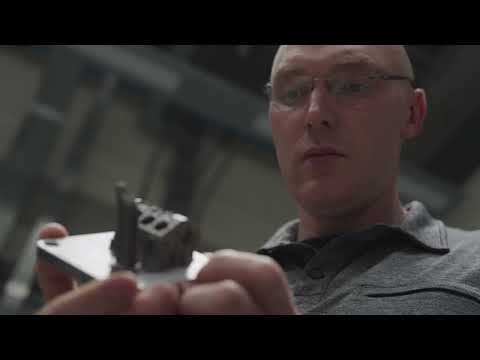
Mechanical Engineering
University of Galway
Required Education
A Level 8 Honours Bachelor degree in Mechanical Engineering, Chemical Engineering, or Process Engineering is the typical entry route; useful Leaving Certificate subjects include Mathematics, Physics, and Chemistry at Higher level. Irish universities and technological universities offering relevant degrees include UL, UCD, TU Dublin, ATU, and MTU. Some graduates complement their degree with a Level 9 postgraduate qualification in process or manufacturing engineering to specialise further. A PLC course in Engineering Technology or Manufacturing at Level 5 or 6 can provide a pathway into technician roles, from which further study is possible. Professional membership with Engineers Ireland (as a Chartered Engineer) is a recognised mark of professional standing that many employers in this sector value.
Required Skills
Career Perspective
Most mechanical engineers in this field begin in junior or graduate engineering roles, gaining hands-on experience in production environments under the supervision of senior engineers. After several years, you typically progress to a process or production engineer position with greater responsibility for optimising plant performance and leading small teams. With further experience and possibly a Level 9 postgraduate qualification or Chartered Engineer status through Engineers Ireland, you may move into senior engineering, plant management, or consultancy roles. Some engineers transition into related sectors such as packaging, pharma, or med-tech manufacturing, where mechanical engineering skills are highly transferable.
AI Impact on the job
AI-powered monitoring systems are increasingly being used in manufacturing environments to detect equipment faults, predict maintenance needs, and optimise production parameters in real time, reducing the burden of manual monitoring on engineers. Machine learning tools can analyse large volumes of production data far more quickly than humans, helping to identify quality issues and process inefficiencies earlier. However, the physical nature of the role — inspecting machinery, assessing raw material quality, and managing on-site operations — means that human engineering judgement remains essential. Engineers who can work alongside AI tools and interpret their outputs will be well placed to add value in an increasingly data-driven manufacturing environment.
Career Ladder
→ Mechanical Engineer (Current role)
Related Studies
Mechanical Engineering
4 year • Tech & Engineering
BachelorSustainable / Renewable Energy Engineering
4 year • Tech & Engineering
FETPre-University Engineering (QQI Level 5)
1 year • Tech & Engineering
BachelorMechanical and Manufacturing Engineering
4 year • Tech & Engineering
ApprenticeshipToolmaking and Precision Engineering Apprenticeship
4 year • Tech & Engineering
BachelorAircraft Systems Engineering
4 year • Tech & Engineering
Employers in Ireland
Organisations in Ireland that employ people in this occupation.
Clondalkin, Dublin; Navan, Co. Meath; Nationwide
Engineers maintain paper and packaging production machinery across Irish mills.
Dublin
Mechanical engineers support fibre-based materials production and process optimisation.
Letterkenny, Co. Donegal
Engineers oversee pulp-based sack manufacturing and equipment performance.
Limerick
Mechanical engineers maintain corrugated and paper packaging production lines.
Portlaoise, Co. Laois; Mullingar, Co. Westmeath
Engineers ensure efficient corrugated paper board manufacturing and machinery uptime.
Dublin
Engineers support pulp processing and coated paper product quality control.
Dublin; Nationwide
Provides contracted mechanical engineers to paper and pulp facilities nationally.
Newbridge, Co. Kildare; Midlands
Mechanical engineers work on biomass and fibre processing plant operations.
Dublin; Cork; Nationwide
Engineers design and commission pulp and paper manufacturing process plants.
Dublin; Nationwide
Facilitates inward investment attracting paper and pulp manufacturing employers.
Lurgan (cross-border operations serving Irish market); Dublin sales office
Mechanical engineers optimise fibre-based food packaging production processes.
We don't know whether these employers currently have vacancies — always check their own website. And if there's somewhere you'd really love to work, it can be worth applying anyway, even without an open vacancy.
Our tools can help you with that:
This website uses cookies
We use functional cookies and — with your consent — cookies for preferences, statistics and marketing.