Install Findmino as an app for the best experience!
Science Communicator
(Science Outreach Officer, Research Communications Officer, Public Engagement Specialist, Scientific Communicator)
Science & Research
Salary
€32,000 - €70,000/yr
Level
Professional
Outlook
Growing
Sector
Science & Research
What does a Science Communicator do?
As a Science Communicator you translate complex scientific research and ideas into clear, engaging content for public audiences, whether through museum exhibitions, science festivals, broadcast media, podcasts, or written articles. You work closely with researchers, journalists, educators, and cultural institutions to make discoveries accessible and relevant to everyday life. On a typical day you might script a short explainer video, prepare materials for a Sci-Fest event, liaise with an SFI-funded research team about an outreach programme, or write a feature piece for a general-interest publication. You may also evaluate the effectiveness of communications campaigns and gather feedback to improve future outputs. The role sits at the intersection of science, storytelling, and public engagement, and no two working weeks look quite the same.
A Day in the Life
Listen: a day as a Science Communicator
Your alarm goes off at 7:15 on a Tuesday morning. You check your emails over breakfast and see that a researcher from the SFI-funded centre you work with has sent overnight notes on a draft explainer video script you wrote last week. She is happy with most of it but flags two paragraphs where the terminology is still too dense for a general audience. You add those edits to your to-do list before heading into the office at a science centre in Dublin city. By 9:30 you are at your desk, revising the script on Google Docs and cross-checking a fact about CRISPR gene editing against the published paper the researcher sent. Getting the science exactly right matters as much as making it readable, so this takes longer than you expect. A colleague reminds you that the deadline for a Sci-Fest Ireland schools workshop pack is Friday, and you have not yet finished the activity sheet for transition-year students.
Videos about Science Communicator
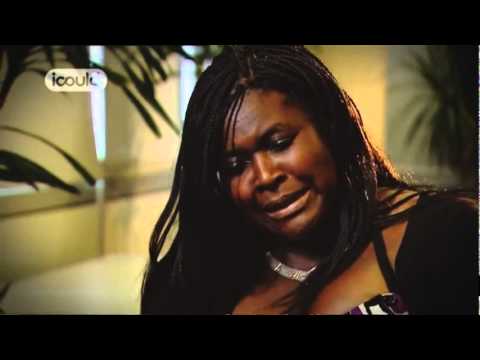
Career Advice - Space Scientist and Science Communicator by Maggie Aderin-Pocock MBE (Full Version)
icould career stories
Some videos were filmed in the UK. The work itself is the same, but the exams, qualifications and pay they mention are British — we include them so you get a feel for the job.
Required Education
A Leaving Certificate with strong results in subjects such as Biology, Chemistry, Physics, English, and Geography provides a solid foundation for entry into this field. The typical minimum qualification is an NFQ Level 8 Honours Bachelor degree; relevant programmes include degrees in science (any discipline), journalism, media studies, or English literature, often combined with a postgraduate diploma or master's in science communication offered at institutions such as UCD, University of Galway, or DCU. Some practitioners enter through a science degree and then complete an NFQ Level 9 master's specifically in science communication, public engagement, or technical communication, which is increasingly preferred by employers. There is no statutory professional registration body for science communicators in Ireland, though membership of organisations such as the British Science Association or relevant journalism bodies can enhance your professional profile. PLC courses in media production or digital content creation at Level 5 or 6 can be a useful stepping stone before progressing to a degree programme.
Required Skills
Career Perspective
Most Science Communicators begin in junior or assistant roles within museums such as Science Gallery Dublin or Explorium, with media organisations, or within the communications offices of universities and research institutes. With a few years of experience you can move into a senior communicator or science outreach manager position, taking responsibility for campaigns, budgets, and team coordination. Some professionals specialise further — moving into science journalism, broadcast presenting, e-learning content development, or policy communication for bodies like SFI or the Health Research Board. A postgraduate qualification in science communication or a related discipline can accelerate progression into leadership or academic positions.
AI Impact on the job
AI tools are increasingly used by Science Communicators to draft initial content, generate images or animations, transcribe interviews, and analyse audience engagement data, which can significantly speed up production workflows. However, the core skills of accurate scientific interpretation, ethical judgement, and genuine storytelling remain distinctly human and cannot be reliably delegated to AI systems. Communicators who learn to work effectively alongside AI — using it as a production assistant rather than a replacement — are likely to be more productive and competitive in the job market. There is also a growing need for science communicators specifically able to explain AI itself to the public, creating new niche opportunities in this space.
Career Ladder
→ Science Communicator (Current role)
Related Studies
Journalism
4 year • Communication & Media
BachelorGeneral Science
4 year • Science & Mathematics
BachelorPhysics
4 year • Science & Mathematics
BachelorPublic Relations and Communications
4 year • Business & Economics
BachelorBiomedical Science
4 year • Science & Mathematics
PostgraduateGastronomy and Food Studies
2 year • Hospitality & Tourism
Employers in Ireland
Organisations in Ireland that employ people in this occupation.
Dublin 2
Communicate publicly funded research through outreach programmes and media
Nationwide
Organise and promote student science festivals across Ireland
Donnybrook, Dublin 4
Produce and present science content for broadcast television and radio
Trinity College Dublin, Dublin 2
Develop public exhibitions bridging art, science, and culture
Dublin 2
Communicate heritage science and archaeological research to public audiences
Dublin 2 and Nationwide
Develop interpretive content and public programming around natural sciences
Dublin 4
Communicate astrophysics, geophysics, and Celtic studies research publicly
Blackrock, Cork
Deliver astronomy and STEM public engagement programmes and events
Belfield, Dublin 4
Translate university research into media-ready stories for public audiences
Cork
Communicate photonics and semiconductor research through outreach and media
Nationwide
Create and disseminate science communication resources for educators nationwide
We don't know whether these employers currently have vacancies — always check their own website. And if there's somewhere you'd really love to work, it can be worth applying anyway, even without an open vacancy.
Our tools can help you with that:
Famous Irish people who did this
Get inspired by people whose path led them to work like a Science Communicator. Tap a face to read their story.


Search Current Vacancies
Tip: These links take you to current vacancies for Science Communicator in Ireland
Discover more on Findmino
Other studies, careers, ideas and blogs you might not know yet.
This website uses cookies
We use functional cookies and — with your consent — cookies for preferences, statistics and marketing.